Category:

Gameday

NRFT - Disney World

The Best Family Amusement Parks

If you want to spend quality time with your kids, get them off their screens, and actually have fun yourself, an amusement park is hard to beat. You don’t need a deep philosophical reason to go. Vacations are about shared experiences, adrenaline, and sometimes just getting out of the house.

Planning these trips, however, takes work. You need to know what you’re getting into regarding rides, food, lodging, and the overall cost. Here is the updated, no-nonsense guide to the top 10 family amusement parks in the US for 2026.

The Top 10 US Amusement Parks for You and Your Kids in 2026

Disney World

Disney World is massive—four theme parks, two water parks, and an entire ecosystem of resorts. It requires planning, but it delivers an incredibly polished experience. Here are some of our favorites worth researching before you go:

Best Rides for Kids

  • Tiana’s Bayou Adventure: The revamped log flume ride in Magic Kingdom with a solid drop.
  • Slinky Dog Dash: A great entry-level roller coaster over in Hollywood Studios.
  • Guardians of the Galaxy: Cosmic Rewind: For older kids, this indoor coaster in EPCOT is arguably the best ride on the property.

Dining

  • Dole Whip: The legendary pineapple soft-serve. Find it in Magic Kingdom.
  • Satu’li Canteen: Excellent, relatively healthy quick-service bowls in Animal Kingdom.
  • Woody’s Lunch Box: Elevated grilled cheese and loaded totchos in Hollywood Studios.

Lodging

  • Value: Pop Century or Art of Animation (great access to the Skyliner transportation system).
  • Moderate: Caribbean Beach Resort or Coronado Springs.
  • Deluxe: Animal Kingdom Lodge (animals outside your window) or The Polynesian (monorail access).

Water Parks

  • Blizzard Beach & Typhoon Lagoon: Splash into a world of water wonder, slide into excitement, float in a sea of relaxation.

The Damage

  • Tickets: $119 to $219 per day, depending on the park and time of year. Park Hopper add-ons increase the price.
  • Lodging: Value resorts start around $150/night; Deluxe can easily clear $700/night.
  • Food: Quick service meals run $15–$20 per person.

NRFT Thoughts

Disney World is like diving into a live-action storybook. It’s nostalgic, it’s fun, and yes, it’s magical. Whether you’re riding rollercoasters, sharing a meal, or just soaking in the vibes, it’s a place to make memories. Let loose, have fun, and maybe, just maybe, wear those Mickey ears without a hint of irony.

Universal Orlando Resort

Universal is the ultimate destination if your kids are slightly older, love Harry Potter, or are aging out of traditional “fairy tale” magic. The big news for 2026 is the full operation of Epic Universe, their massive new third gate.

Top Rides for the Kids

  1. Hagrid’s Magical Creatures Motorbike Adventure: The best themed coaster in Orlando.
  2. VelociCoaster: A highly aggressive, incredibly smooth coaster for teens and thrill-seekers.
  3. Minion Mayhem: A stationary simulator ride that younger kids love.

Dining

  1. The Three Broomsticks / Leaky Cauldron: Eat British pub fare in incredibly themed dining halls. Get the Butterbeer.
  2. Mythos: Routinely ranked as one of the best theme park restaurants in the world.
  3. Toothsome Chocolate Emporium: Massive, over-the-top milkshakes at CityWalk.

Lodging

  • Value/Prime Value: Cabana Bay Beach Resort or Endless Summer. Great pools and direct park transport.
  • Preferred/Premier: Hard Rock Hotel or Royal Pacific. Staying at Premier hotels includes free Universal Express passes.

Water Thrills

  • Volcano Bay: A tropical water theme park, centered around a massive volcano. Waves, slides, and relaxation await.

The Damage

  • Tickets: Single-day tickets run $139–$199+. If you want to visit Epic Universe, you usually need a multi-day ticket bundle (averaging $120/day for 3 days).
  • Lodging: $160/night for value up to $650+/night for premier.
  • Food: Roughly $60–$100 per person, per day.

NRFT Thoughts

Universal is much easier to navigate than Disney. You can walk between Islands of Adventure and Universal Studios. If you can swing it, stay at a Premier hotel—the included Express Pass pays for itself by allowing you to skip the regular lines.

Disneyland Resort

The original park Walt built. It’s smaller, denser, and much easier to tackle than its Florida counterpart.

Top Rides for Kids

  1. Radiator Springs Racers: The crown jewel of Disney California Adventure.
  2. Pirates of the Caribbean: Longer and better than the Florida version.
  3. Mickey & Minnie’s Runaway Railway: A visually stunning, trackless dark ride.

Dining

  1. Blue Bayou: Dine inside the Pirates of the Caribbean ride. Book early.
  2. Cozy Cone Motel: Great snacks (churros, mac and cheese cones) in Cars Land.
  3. Plaza Inn: Excellent fried chicken right on Main Street.

Loging

  • On-Site: Grand Californian (luxury, opens directly into the park), Disneyland Hotel, or Pixar Place Hotel.
  • Off-Site: Dozens of “Good Neighbor” hotels are located directly across the street on Harbor Blvd. Many are a shorter walk to the gate than the official Disney hotels.

The Damage

  • Tickets: $104 to $194 per day.
  • Lodging: Off-site hotels run $150–$300/night. On-site starts at $400 and goes way up.
  • Food: Around $60 per person, per day.

NRFT Thoughts

Disneyland is a pedestrian’s dream. You can walk everywhere, meaning no waiting for buses. It’s the perfect park if you want the Disney experience with less logistical stress.

Cedar Point – Sandusky, Ohio

Situated on a peninsula in Lake Erie, Cedar Point is the roller coaster capital of the world. It’s clean, well-run, and heavily focused on massive thrills.

Best Rides for Kids

  • Steel Vengeance: One of the best hybrid wooden/steel coasters on the planet (for older kids/teens).
  • Top Thrill 2: The newly revamped strata-coaster.
  • Camp Snoopy: An entire section dedicated to younger kids who aren’t ready for 300-foot drops.

Dining

  • Hugo’s Italian Kitchen: Solid pizza and pasta.
  • BackBeatQue: Great BBQ with live music nearby.
  • Toft’s Ice Cream: Local Ohio ice cream that serves massive portions.

Lodging

  • Hotel Breakers: Historic resort located literally on the beach steps away from the coasters.
  • Lighthouse Point: Cabins and RV spots right by the water.

The Damage

  • Tickets: Very reasonable. Online daily tickets start around $52.
  • Lodging: Hotel Breakers runs $250–$400/night in the summer.
  • Fast Lane: Highly recommended. This can cost more than the ticket itself ($100+), but it’s essential on busy summer weekends.

NRFT Thoughts

If your kids are adrenaline junkies, this is your mecca. Buy the Fast Lane pass. Yes, it hurts to pay double, but waiting two hours for one ride ruins the day.

Six Flags Magic Mountain – Valencia, California

If Cedar Point is the coaster capital of the Midwest, Magic Mountain is the king of the West Coast. With 20 roller coasters, it holds the world record for the most coasters in a single park.

Best Rides for Kids

  • Bugs Bunny World: 6 acres of pint-sized rides for the little ones.
  • West Coast Racers: A dueling coaster that’s incredibly fun.
  • X2: A mind-bending 5th-dimension coaster where the seats spin independently of the track. (Strictly for older teens).

Dining

  • Food & Brew: Standard theme park fare with a good selection of craft beers for dad.
  • Katy’s Kettle: Solid burgers and fries.

Lodging

  • There are no on-site hotels, but plenty of standard chain hotels (Courtyard, Embassy Suites) are located within a 5-minute drive in Valencia.

The Damage

  • Tickets: Daily tickets range from $45 to $70 online.
  • Lodging: Nearby hotels run $120–$200/night.
  • Flash Pass: Starts around $80 and goes up depending on the tier.

NRFT Thoughts

This park is huge and built into a literal mountain. You will be walking up and down steep inclines all day. Wear good shoes and hydrate. And enjoy.

Busch Gardens Williamsburg – Williamsburg, Virginia

Routinely voted the most beautiful theme park in America, this park is themed around different European countries. It perfectly balances world-class coasters with incredible landscaping and shows.

Best Rides for Kids

  • Verbolten: An indoor/outdoor multi-launch coaster with a surprise drop track.
  • Alpengeist: A massive, smooth inverted coaster.
  • Sesame Street Forest of Fun: Excellent for toddlers and preschoolers.

Dining

  • Das Festhaus: German sausages, massive pretzels, and a live show in a giant beer hall.
  • Trapper’s Smokehouse: Really good BBQ in the “New France” section.

Loging

  • No on-site hotels, but Williamsburg is a massive tourist hub. You can find everything from budget motels to luxury resorts (like Kingsmill) nearby.

The Damage

  • Tickets: Ranging from $60 to $113 for a single day, depending on current promotions.
  • Lodging: $100–$300/night in the surrounding area.
  • Food: Expect to pay around $25 for a solid meal combo.

NRFT Thoughts

This is arguably the best all-around regional park in the country. The food is better than average, the coasters are top-tier, and the shade from the mature trees makes summer visits tolerable.

Carowinds – Charlotte, North Carolina

Sitting right on the border of North and South Carolina, Carowinds is a clean, rapidly expanding park with a fantastic mix of extreme coasters and family rides.

Best Rides for Kids

  • Fury 325: One of the tallest and fastest coasters in the world. Smooth as glass.
  • Copperhead Strike: A double-launch coaster with great hang-time.
  • Camp Snoopy: Recently renovated and perfect for younger kids.

Dining Experiences

  • Harmony Hall: A massive food court with air conditioning, live music, and excellent brisket.
  • Blue Ridge Country Kitchen: Great rotisserie chicken and Southern sides.

Lodging

  • SpringHill Suites by Marriott: Located on Carowinds property, just a short walk to the gate.
  • Camp Wilderness: On-site cabins and RV hookups.

The Damage

  • Tickets: Online tickets are incredibly cheap, usually hovering around $39 to $45.
  • Lodging: SpringHill Suites averages $150–$250/night.
  • Food: $20 per meal.

NRFT Thoughts

Carowinds is a sleeper hit. It doesn’t have the national recognition of Cedar Point, but Fury 325 alone is worth the trip for older teens. The adjacent water park (Carolina Harbor) is included with admission, making it a great two-day destination.

Six Flags Great Adventure – Jackson, New Jersey

Located between New York and Philly, Great Adventure is home to some of the most extreme rides on the East Coast, plus a massive drive-through safari.

Best Rides for Kids

  • Kingda Ka: Still one of the tallest coasters in the world. A pure 10-second adrenaline rush.
  • El Toro: Widely considered one of the best wooden coasters ever built. (Very aggressive).
  • Bugs Bunny National Park: For the kids who aren’t ready for 400-foot drops.

Dining

  • Best of the West: Standard theme park burgers with a great view of the lake.
  • Macho Nacho: Decent Mexican fast food.

Lodging

  • You’ll need to drive 15-20 minutes to find standard chain hotels in the surrounding New Jersey towns.

The Damage

  • Tickets: $45 to $90 online.
  • Lodging: $120–$200/night nearby.
  • Food: Standard theme park pricing, roughly $20 a meal.

NRFT Thoughts

Do the Wild Safari. It’s included with park admission and is a genuinely cool experience. Hit Kingda Ka right when the park opens, as it’s prone to downtime later in the day.

Kennywood Park, Pittsburgh, PA

Kennywood is a National Historic Landmark. It’s a traditional trolley park that perfectly blends 100-year-old wooden coasters with modern steel thrill machines.

Best Rides for Kids

  • The Jack Rabbit: A century-old wooden coaster famous for its double-dip drop.
  • The Steel Curtain: A massive modern coaster featuring nine inversions for older teens.
  • Kiddieland: One of the best collections of vintage kids’ rides in the country.

Dining

  • The Potato Patch: Dive into some of the park’s most famous fries, a true Kennywood tradition. You do not go to Kennywood without getting Patch Fries covered in bacon and cheese. It’s mandatory.

Lodging

  • Probably better to not stay in Homewood (the area where Kennywood is located). Nearby downtown Pittsburgh provides some beautiful hotels, or if you want to be closer to the park, look into Pittsburgh’s Waterfront area.

The Damage

  • Tickets: Very affordable, ranging from $40 to $60 online depending on the date.
  • Lodging: Pittsburgh hotels range widely, but average $150/night.
  • Food: Food is cheaper here than the corporate parks. You can eat well for $15 a person.

NRFT Thoughts

Kennywood has soul. It doesn’t have the massive footprint of a Disney or Six Flags, but the atmosphere is unbeatable. It’s an easy, low-stress day out that gives your kids a taste of how amusement parks used to feel.

Knott’s Berry Farm – Buena Park, California

Located just 15 minutes from Disneyland, Knott’s is California’s original theme park. It leans heavily into its Ghost Town roots while offering top-tier coasters.

Best Rides for Kids

  • GhostRider: An incredibly long, fast, and smooth wooden coaster.
  • Calico Mine Ride: A classic, charming dark ride.
  • Camp Snoopy: Knott’s is the home of Snoopy, and this area is perfectly tailored for kids under 10.

Dining

  • Mrs. Knott’s Chicken Dinner Restaurant: The restaurant that started the park. The fried chicken and boysenberry pie are legendary.
  • Ghost Town Grill: Sit-down dining right in the middle of the Wild West.

Lodging

  • Knott’s Berry Farm Hotel: Located right next to the park. It’s clean, affordable, and convenient.

The Damage

  • Tickets: Around $65 online.
  • Lodging: The Knott’s Hotel usually runs $150–$250/night.
  • Food: Plan for $20-$30 per person, especially if you do the Chicken Dinner.

NRFT Thoughts

NRFT Thoughts: Don’t skip Knott’s just because Disneyland is down the street. It’s cheaper, the roller coasters are significantly better, and the Ghost Town area provides an immersive atmosphere you won’t find at standard thrill parks.

Riding the Rides

Amusement parks are loud, they’re expensive, and they will absolutely drain your energy. But they are also one of the few places left where you can completely unplug from the daily grind and just experience pure, unadulterated fun with your family.

Whether you’re pushing a toddler in a stroller or trying to keep up with your 12-year-old as they sprint toward the biggest roller coaster in the park, the window for these kinds of trips closes faster than you think. Soon enough, they’ll be driving, working, and taking trips of their own.

So pick a park, set a budget, and buy the tickets. Don’t overthink the logistics once you’re there. Eat the junk food, buy the overpriced photo from the log flume, and just be the hero for the weekend. The exhaustion and the credit card bill will get paid off in a month or two, but the memories you make out there are going to stick around for a lifetime.

Now stop reading, pick a destination, and go ride something. Seriously, dude.
0 comments
0 FacebookTwitterPinterestEmail
NRFT - Video Games

Discovering Video Games for the First Time

Ok if you’re reading this I assume you didn’t get into gaming as a kid, or haven’t played video games since Goldeneye 007 in the 1990s. But I encourage you to realize that you don’t have to be a kid to appreciate the value of gaming. Playing video games is much more than mindless escapism or entertainment.

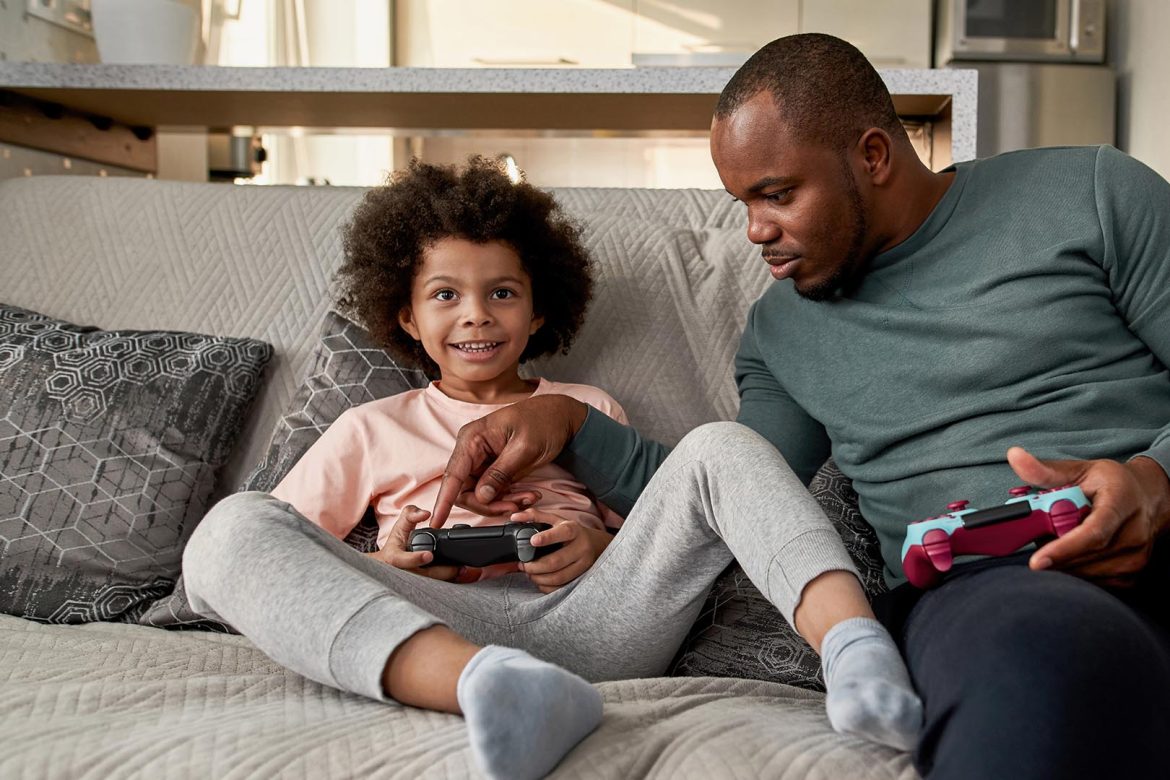
For parents, gaming is an opportunity to connect with kids on a totally different level. We grew up bonding over catching football or going on fishing trips—which you should absolutely still do—but gaming offers today’s parents a new way to share those parent/child moments. Even if your last real gaming experience was trying to beat Mike Tyson’s Punchout, picking up a games that fit your style on a modern game system gives you a chance to meet your kids on their turf.

There is also more to gaming than just having fun. It is a practical way for kids to develop real strategy and problem-solving skills right alongside you. While the hardware comes with a price tag, view it as a direct investment in your family’s time together.

For years, psychological research on video games focused almost entirely on negative effects like addiction or aggression. Recent studies, however, highlight that gaming provides immersive experiences that can actually enhance cognitive and emotional development. Researchers have found that games—especially cooperative or competitive ones—create environments where children can safely practice problem-solving, emotional regulation, and teamwork. When you as a parent joins in, you turn what is typically an isolated activity into a shared experience, giving yourself a stage to organically model how to handle frustration or “gamer rage” when a level gets difficult. You can demonstrate persistence in the face of certain death. And you can laugh at the silly moments that will happen.

The Power of “Co-Playing” Over Strict Rules

Studies on parent-child co-playing show that gaming together is a far more effective mediation strategy than simply enforcing strict time limits or content bans. Highly restrictive rules often lead to increased parent-child conflict and tension. In contrast, co-playing is an active approach. By stepping into a child’s virtual leisure space, the parent allows the child to act as the “expert,” which temporarily shifts the typical family dynamic and builds mutual trust. Psychologists note that this shared activity opens up natural avenues for communication, making it easier to discuss healthy boundaries or real-life problems without the conversation feeling like a lecture.

Introduction: The Grand Adventure of Gaming as an Adult

So, you’ve decided to give gaming a shot. The sheer volume of games and consoles out there right now can feel overwhelming, but you don’t need to overthink it. We are going to break the games down so it actually makes sense for you. From figuring out what types of games you will genuinely enjoy, to picking the right hardware, to finding the time to fit playing into your normal routine—here is everything you need to know to get started.

What Kind of Video Game Is Right for You?

Not every video game is going to be for you, and that’s perfectly fine. Finding the right genre takes a little trial and error, but once you figure out what clicks, it is incredibly rewarding.

Puzzle Lovers: If you enjoy a daily crossword or Sudoku, start here. Games like Portal and Tetris are perfect for testing your logic and problem-solving skills. If you want something with more atmosphere, Little Nightmares 2 and Monument Valley combine great visuals with mind-bending mechanics.

Adventure Seekers: If you want to explore massive worlds and uncover secrets, look at games like The Legend of Zelda: Tears of the Kingdom or Resident Evil 8. These games drop you into fully realized environments—ranging from fantasy kingdoms to terrifying, isolated villages—and let you drive the story forward. You’ll need to learn the controls–it’s just practice and muscle memory, keep at it and you’ll get it (and those skills will translate to other games, too).

Life Simulators: Sometimes you just want to relax and build something at your own pace. Games like The Sims and Stardew Valley let you design a home, manage a farm, and interact with a virtual community. They are low-stress, open-ended, and entirely driven by the choices you want to make.

Social Butterflies: If your main goal is just having fun with other people, jump into Among Us or Mario Kart. Whether you are racing each other or trying to figure out who is lying in a game of deception, these titles are built specifically for multiplayer laughs and friendly competition.

Creative Souls: If you would rather build your own fun, Minecraft and Little Big Planet hand you the tools to create practically anything. From building simple houses to engineering complex machines, these games act as a digital sandbox where you set your own goals.

Movie Lovers: There are some great games that play more like an interactive movie. “The Quarry” is a phenomenal first step into gaming (especially if you grew up in the 80s), and “What Remains of Edith Finch?” is storytelling at its best.

The Quarry is F’#%@in Amazing.

There are plenty of other genres out there—from sports and role-playing to fast-paced action. Don’t be afraid to try a few different styles until you find what works for you. You can also watch full gameplays on YouTube to get a feel for the game (simply search “name of game” + full playthrough). The barrier to entry is lower than it looks, and you are absolutely not too old to start playing.

Consoles, Computers, and Where to Play

Oh, the places you can play! Understanding the different gaming systems is akin to learning the fundamentals of a playbook. Each has its role, and knowing them is key to executing the game plan.

  • Nintendo Switch and Switch 2: This is the most versatile option on the market. You can dock it to the TV to play Mario Kart with the kids in the living room, or pick it up to play Animal Crossing in handheld mode. Nintendo’s exclusive library includes family-friendly titles like Super Mario Odyssey and Splatoon that appeal to practically every age group. Honestly, the system is worth buying for The Legend of Zelda: Tears of the Kingdom alone, though keep in mind that game can have a steep learning curve for first-time players.
  • Xbox: Microsoft’s current consoles are the Xbox Series X (the high-end version) and the Series S (the budget-friendly, digital-only version). If you want high-tier graphics and blockbuster action, this is a solid choice. You can play massive shooters like Halo, sports-driven games like Madden, or family party games like Just Dance. The biggest selling point here is Xbox Game Pass—a monthly subscription service that acts like Netflix for video games, letting you download and try hundreds of titles without buying them individually.
  • PlayStation: Sony’s PlayStation 5 is the direct competitor to the Xbox and has dominated the market for years. The main reason to choose a PlayStation is for Sony’s exclusive, narrative-heavy games. Titles like Spider-Man, God of War, and The Last of Us offer some of the most cinematic, story-driven experiences in gaming, focusing heavily on deep character development.
  • PC Gaming: You don’t necessarily need a dedicated gaming console if you already have a computer. From high-end, custom-built desktop rigs to a standard family laptop, PC gaming offers massive flexibility. You can buy and download almost anything through a digital storefront called Steam, including deep strategy games like Civilization or multiplayer worlds like World of Warcraft. As a bonus, if you are already comfortable typing and navigating a computer for work, playing first-person shooters like Call of Duty with a mouse and keyboard is often much easier to learn than using a standard controller. You may need to google “can my computer play XXXXX game” and learn a little bit about your system before making a purchase, however.
  • Mobile Gaming: Don’t overlook the device already sitting in your pocket. Whether you have an iPhone or an Android, mobile gaming offers everything from quick puzzles like Candy Crush to competitive shooters like PUBG Mobile. 12-year-olds especially seem to gravitate toward the Bloons games, as well as Plants vs. Zombies. You will find a mix of free games supported by ads or microtransactions (like Subway Surfers or Brawl Stars) and premium games that require a one-time payment for an uninterrupted experience (like Monument Valley). Both are completely viable ways to jump into gaming.

Starting Slow, but Not Too Slow

Learning to play video games is a lot like learning to drive a stick shift. At first, you have to think about every single movement your hands are making, and it feels completely unnatural. You are going to hit the wrong buttons, stare at the controller instead of the TV, and probably walk your character into a few walls. That is completely normal. Here is how to push through that initial awkward phase so you can actually start enjoying yourself:

  • Beginner Games: Don’t jump straight into a high-stakes, competitive multiplayer game where a single mistake ruins the match. Start with titles designed to be approachable and gentle. Playing Minecraft in “Creative Mode” or exploring a game like Journey offers a stress-free environment to get used to navigating a digital world. These games prioritize exploration over punishing combat, meaning if you mess up, there are zero negative consequences. You can figure out the controls at your own pace.
  • Tutorials and Guides: It is tempting to skip the slow, text-heavy training missions at the beginning of a game, but don’t do it. Those built-in tutorials are specifically designed to build the muscle memory you need to play. If a game still feels confusing after the intro, don’t just put the controller down and walk away. YouTube is packed with beginner guides for practically every title in existence. Watching a quick ten-minute overview can save you hours of frustration.
  • Difficulty Settings: Don’t be shy to play on easy mode first! Playing on an easier setting allows you to experience the story and learn the mechanics without constantly having to restart a level because your character died. Once you get the hang of things and want more of a challenge, you can usually raise the difficulty right from the pause menu.
  • Play with Friends or Family: If you are feeling intimidated, ask your kids to show you the ropes. Sitting down and asking your 12-year-old daughter to teach you how her favorite game works completely flips the typical family dynamic in a great way. It puts her in the expert’s seat and removes the pressure of you needing to know everything from the start. Having a more experienced player sitting right next to you makes the learning curve much faster—and a lot more fun.

Online or Offline Gaming? A Conundrum

Gaming today offers both vibrant online communities and rich solo experiences. To play with others or to enjoy solitary adventures, that’s the question. Both avenues have their allure:

  • Online Multiplayer: If you want a social experience, this is where you go. You can play fast-paced digital sports in Rocket League or drop into massive, competitive matches in Fortnite. Online gaming lets you team up cooperatively with your real-life friends, join larger gaming communities, or just jump into a casual match to test your skills against strangers. You’ll need a working Internet connection and to set up your console to play online.
  • Solo Gaming: If you want a personal, uninterrupted experience, single-player games are the way to go. Titles like The Witcher 3: Wild Hunt and Red Dead Redemption 2 play out like massive, interactive movies. They are packed with deep storylines, complex characters, and incredible visuals. Because your choices often dictate how the story unfolds, it feels like a highly personal adventure that you can take entirely at your own pace.
  • Hybrid Games: Some titles blur the line between solo and multiplayer entirely. Games like Destiny 2 and Sea of Thieves drop you into a shared online world but let you decide exactly how you want to interact with it. You can knock out missions completely on your own, or instantly team up with other players when you want to tackle larger, more difficult challenges.

Straight Up Not Cool: The Joy of Failure and Persistence

Mastering New Skills: Recall those first wobbly steps into a pool or that exhilarating feeling of landing a perfect throw? Just like swimming or any sport, gaming is an acquired skill set. It comes with its own set of challenges and joys. Setbacks aren’t your enemy. In fact, they are the milestones that, once overcome, lead you to expertise. Much like that first deep dive or goal scored, every gaming win is a testament to your perseverance.

  • Learning from Mistakes: Recall the frustration of learning to cast a fishing line without tangling it, or that exhilarating feeling of finally reeling in a catch? Just like those early days out on the water, gaming is simply an acquired skill. Setbacks aren’t your enemy; they are just part of the process. Every time you finally beat a level or figure out a complex control scheme, it is a direct result of your own perseverance.
  • Taking Breaks: Every time your character dies or a mission fails, don’t take it personally. In video games, failure is a built-in teaching tool. Each time you mess up, the game is showing you what to avoid and forcing you to try a different approach. When you get stuck in a tricky spot, it is not a dead end—it is just the game pushing you to figure out a better strategy. Expect to fail, and use it to get better.
    • Every single player, from first-timers to seasoned pros, hits a wall of pure frustration at some point. When a level feels impossible or you find yourself gripping the controller too tightly, it is time to walk away. Hit pause, stretch your legs, and grab a snack. Gaming is supposed to be an enjoyable escape, not a chore that spikes your blood pressure. Taking a quick break often gives you the mental reset you need to finally beat whatever was holding you back.
  • Celebrate Progress: Celebrate the small wins. Whether you finally memorize a confusing map, unlock a rare achievement, or just manage to hold your own in a multiplayer match against your kids, those moments matter. They aren’t just meaningless digital badges; they are proof that the controls are finally clicking for you. Every time you push past a “Game Over” screen, you are building the muscle memory you need to stop overthinking the buttons and just enjoy playing the game.

Embrace the Gaming Community

The gaming community is massive. Your neighbor, your boss, your kids’ friends, and even retirees are probably all playing—often in the exact same game. You never know when you might end up in a multiplayer match alongside a professional athlete or celebrity. It is a much wider and more welcoming demographic than you might think.

  • Forums and Social Media: Platforms like Reddit, X (formerly Twitter), or dedicated gaming Discord servers are incredibly useful resources. If you get stuck on a level or want to know which game to buy next, these communities are the best places to ask questions, share your own experiences, and get direct advice from people who have already figured it out.
  • Streaming Platforms: Watching other people play video games on Twitch or YouTube might sound strange at first, but it is both entertaining and genuinely educational. Streamers often talk through their strategies out loud, so watching them is essentially like having a free, personal tutor to show you exactly how a game is supposed to be played.
  • Local Gaming Groups: Gaming doesn’t have to be something you just do alone in your living room. Check local Facebook groups, libraries, or community centers. Many towns host casual gaming meetups that are highly welcoming to newcomers looking for a social hobby.
  • Gaming Events: From massive global conventions to smaller regional tournaments, gaming events are everywhere. Even if you don’t consider yourself a “gamer” yet, walking the floor at an expo is a great way to try out unreleased titles, experience the culture firsthand, and meet people who share your new interest.

Gaming as a Parent: Playtime and Balance

Video games are incredibly fun, but they shouldn’t take over your life. The real world still happens—the dog needs walking, dinner needs cooking, and your actual responsibilities still come first. It is easy to lose track of time when you get absorbed in a good game, so the key is figuring out how to enjoy this new hobby without letting it interfere with your daily routine.

  • Schedule Playtime: Treat gaming just like any other adult hobby. Set aside specific windows of time to play, whether that is for an hour after the kids go to bed or on a lazy Sunday afternoon. Putting boundaries on your screen time ensures you can enjoy playing without it eating into your other priorities.
  • Family Gaming: Use gaming as a built-in way to spend quality time together. Games like Overcooked or Super Smash Bros. are perfect for getting the whole house involved in the living room. Playing together naturally opens up communication and creates a shared experience—it is exactly the same as having a family board game night, just with controllers.
  • Healthy Habits: It is easy to sit on the couch for hours without realizing it. Make it a point to stand up, stretch, and grab a glass of water between levels or matches. Pay attention to your posture, and don’t ignore eye strain. Taking care of yourself physically ensures you can actually enjoy the time you spend playing without ending up with a stiff neck or a headache.

Gaming Etiquette: Be Kind to Yourself and Others

When you jump into online multiplayer, it is easy for interactions to feel entirely impersonal. However, it is essential to remember that behind every digital character is a real person. Here is how to keep your experience positive:

  • Gaming Etiquette: Treat people online exactly how you would in the real world. It is easy to forget there are actual human beings behind those usernames, especially when a match gets competitive. Politeness and basic empathy go a long way toward making the game more enjoyable for everyone.
  • Self-Kindness: If you feel completely lost or stuck, don’t beat yourself up. Every single player started exactly where you are. You are doing this to have fun and unwind, so if a game stops being enjoyable and just makes you frustrated, there is zero shame in putting it down and trying something else.
  • Reporting and Blocking: Unfortunately, you are eventually going to run into players who are toxic, abusive, or just plain annoying. Do not waste your energy arguing with them. Every modern game has built-in tools to mute, block, and report disruptive players. Use these features generously—it instantly fixes your session and helps clean up the community for everyone else.
  • Accessible Gaming: If you have specific physical needs, you can absolutely still play. The gaming industry has made massive strides in inclusive design. Most modern games feature robust accessibility menus where you can activate colorblind modes, increase text sizes, or completely remap the controller buttons to suit your needs. Always check the settings menu first to make the game work for you.

Exploring Different Genres

Gaming isn’t just one thing. It is broken down into massive categories called “genres,” each offering a completely different experience. Here is a quick breakdown of the main ones you will encounter:

  • Role-Playing Games (RPGs): These are your deep, story-driven epics where you take on the role of a specific character and make choices that actually impact the world. Games like Skyrim or Mass Effect are massive, complex adventures, but you can also find highly relaxing RPGs like Stardew Valley, where your main focus is simply managing a farm and befriending the local townsfolk.
  • Action and Shooters (sometimes called FPS for First Person Shooters): This category tests your reflexes and hand-eye coordination. First-Person Shooters (FPS) like Call of Duty or Apex Legends drop you directly into fast-paced, competitive combat from the character’s point of view. If you want the first-person perspective without the intense gunfire, narrative-driven games like Firewatch or Journey let you explore stunning environments at your own pace.
  • Sports and Racing: Exactly what it sounds like. Whether you are playing a quick game of Madden NFL, hitting the pitch in EA Sports FC, or tearing up the track in Forza Horizon, these games perfectly simulate real-world competition. They are incredibly easy for newcomers to pick up because you likely already know the rules.
  • Platformers: If you grew up in the 80s and 90s trying to beat Super Mario Bros. or Mega Man 2, you already know this genre. It is all about running, jumping, and navigating obstacles to reach the end of a level. Modern platformers range from the wildly creative, family-friendly Super Mario Bros. Wonder to the challenging, precision-based Celeste.
  • Strategy Games: If you prefer careful planning over fast reflexes, this is your genre. You can build entire empires in Civilization, manage a wacky medical facility in Two Point Hospital, or just defend your lawn in Plants vs. Zombies. It is all about thinking two steps ahead and managing your resources.
  • Party and Puzzle Games: Built specifically for groups, quick sessions, and testing your brain. The Jackbox Party Pack turns your living room TV into a trivia and drawing gameboard where everyone uses their own smartphones as the controllers. For solo play, classics like Tetris are still around, alongside newer brain-benders like Portal.
  • Indie Games: These are created by small, independent development teams rather than massive corporate studios. Because they don’t have corporate oversight, they take massive creative risks. You get incredible, unique experiences like the spooky mystery of Oxenfree or the striking, hand-drawn art style of Hollow Knight.
  • Educational Games: Screen time doesn’t have to be mindless. Kerbal Space Program genuinely teaches orbital physics, and the Assassin’s Creed: Discovery Tour removes all the combat from the game so you can safely walk around historically accurate recreations of ancient Egypt and Greece like a virtual museum.
  • Virtual Reality (VR): This requires a separate headset—like the Meta Quest—that physically places you inside a 3D game world. You can slash blocks to the beat of music in Beat Saber, explore the enchanting world of Moss, or experience massive, incredibly immersive environments in Half-Life: Alyx. It is a totally different experience from playing on a standard TV.

Gaming Gear and Accessories

The right gear can turn a good gaming session into an unforgettable one. Just like any expert needs their tools, a gamer’s equipment can significantly affect their experience.

  • Controllers: A standard controller works for almost everything, but it isn’t your only option. If you start playing specific genres, you can buy dedicated steering wheels for racing games or flight sticks for simulators. The most important thing is simply finding a controller that actually feels comfortable in your hands for extended periods.
  • Headsets and Sound: Don’t rely on standard TV speakers, especially if you are playing online. A decent headset completely changes how a game feels and gives you a major tactical advantage—you can actually hear which direction footsteps or sound effects are coming from. Plus, it keeps the house quiet while you play.
  • Gaming Chairs and Desks: If you are going to sit for a few hours at a time, do not use a stiff dining room chair. Ergonomic gaming chairs and desks are specifically designed to support your posture during long sessions. Taking care of your back now means you won’t be paying for it the next morning.
  • Customization and Upgrades: If you choose the PC gaming route, half the fun is making the machine your own. You can swap out internal parts like the graphics card to make games look and run smoother, or add custom lighting and cooling systems to make your desk setup look exactly how you want it.
  • Subscription Services: Buying individual games gets expensive quickly. Services like Xbox Game Pass or PlayStation Plus operate just like Netflix for video games. For a monthly fee, you get instant access to a massive library—a true plethora—of titles ranging from small indie hits to massive blockbusters. It is the absolute easiest and most economical way to test out different genres and figure out what you actually enjoy playing.

With the right gear and services, every gaming session can be an elevated experience. Invest wisely and tailor your setup to your specific needs and preferences.

Game Reviews and Recommendations

With new games coming out almost every single day, figuring out what is actually worth your time and money can be overwhelming. Before you buy anything, you need to know where to look for reliable feedback.

  • Gaming Websites: Dedicated sites like IGN, Kotaku, and Game Informer are a great starting point. Their reviews are written by people who play games for a living, so they break down exactly how a title plays, looks, and feels before you spend your money.
  • User Reviews: Professional critics are helpful, but sometimes you just want to know what a regular person thinks. Platforms like Steam and Metacritic aggregate reviews directly from everyday players. Checking these scores is usually the quickest way to spot if a game has annoying technical bugs or if it is actually fun for a casual player, rather than a hardcore expert.
  • Friends and Community: Personal recommendations are still the best way to find your next game. Ask your friends, check a Reddit thread, or just see what the other parents in your kids’ circle are playing. Once you find people who share your specific tastes, their suggestions are going to be far more reliable than an arbitrary score on a website.

Conclusion: Your Game, Your Way

Getting into video games as an adult isn’t about stepping into some weird, alien world; it is simply a new way to play, learn, and connect. Whether you are sailing a pirate ship in Sea of Thieves on Xbox, building a town in Animal Crossing on the Switch, or managing armies in Age of Empires on PC, the options are incredibly diverse.

From the chess-like strategy of Hearthstone to the deep, emotional storytelling of Life is Strange, the experiences are practically endless. It is a medium where creativity, art, and technology come together to offer something you just can’t get from passively watching TV.

You can start slow or dive right in; play entirely by yourself or jump into a match with your family. There is a place for everyone in this space, regardless of your age or skill level. Stop overthinking it, grab a controller, and just start playing.

0 comments
0 FacebookTwitterPinterestEmail
NRFT Blog Post -concussions 3

Understanding Pediatric Head Injuries

You’ve been there and so have we. Head injuries–whether you had to show off for your friends or if you just happened to try to do a backflip on your futon and hit your head on the wooden armrest. These things happen. But back in the 1990s and 2000s, we didn’t really talk so much about serious traumatic brain injuries (TBIs). These are injuries that can occur due to falls, bike accidents, car crashes, sports injuries, or even (this sucks about life on Earth) child abuse. There’s a surprisingly good chance that at some point one of your kids is going to follow in our footsteps and end up with some injury of some sort. So as a dad, it’s so important to recognize the signs and symptoms of the different types of head injuries and know when to seek medical attention.

Dude–we’re not doctors here at NRFT, so while this advice is based on first aid certification classes and triple-confirmed with recommendations from hospitals and relevant organizations offering information about head trauma on the Internet, it’s not medical advice from a healthcare professional. You get that, right? It’s just for your knowledge. Medically speaking, if you even remotely think there’s a chance that a serious head injury has occurred, you need to contact a doctor’s office or visit an emergency room right away.

CRT6 Concussion Recognition Tool

Download this checklist for concussions. Print it. Share it with your school and the coaches of your kids’ sport teams. This is actually what you’re looking for in its most perfect form:

https://bjsm.bmj.com/content/bjsports/57/11/692.full.pdf

Types of Head Injuries (Not Just Concussions)

So you’re thinking that your kid has a concussion. But there’s more than just concussions out there, you know. So check this out, dads–here are the different types of common head injuries that you should be aware of:

  1. Lacerations: Yes, those delightful cuts on the scalp that bleed like a faucet thanks to the human scalp’s copious blood supply. It looks like a scene from Friday the 13th, but fear not! Most of these are more bark than bite. Clean ’em up, slap on a bandage, and keep an eye out for any signs of infection. You know, the usual parenting stuff. You got this.
  2. Contusions: Ah, contusions, or as we commoners call them, bruises. These are the scalp’s way of saying, “Hey, I got hit pretty hard!” and sometimes they swell up into those lovely “goose eggs.” Keep an eye on these too, just in case they’re hiding a deeper, darker secret . . . but generally you’re an ice pack and 48 hours away from this resolving on its own.
  3. Concussions: A concussion is a type of brain injury that affects brain function. It can result from a blow, bump, or jolt to the head, causing symptoms like headaches, dizziness, confusion, and in some cases, loss of consciousness. As a dad, it’s important to monitor for delayed symptoms that might appear hours or even days after the injury.
  4. Hematomas/Hemorrhages: These involve bleeding around or inside the brain and can be life-threatening. Hematomas are particularly dangerous because they can increase intracranial pressure, leading to severe complications if not treated promptly. This is serious shit stuff.
  5. Skull Fractures: These are breaks in the skull bone, which may or may not be accompanied by brain injury. A skull fracture increases the risk of a brain injury and requires immediate medical evaluation to assess the extent of the damage.

Symptoms of Head Injuries

The symptoms of head injuries vary depending on their severity:

  • Mild Head Injuries: Typically cause pain, swelling, bruising, or minor bleeding. Children might cry from the shock and pain, but these symptoms usually resolve with basic first aid.
  • Moderate to Severe Head Injuries: These can cause more alarming symptoms, such as loss of consciousness, confusion, severe headache, repeated vomiting, dizziness, balance issues, slurred speech, weakness in limbs, or seizures. These symptoms indicate a need for immediate medical attention.

Suggestions On What to Do After a Head Injury

  1. Initial Steps:
    • Minor Injuries: Clean any cuts with soap and water, apply a cold compress to reduce swelling, and monitor your kid closely for any changes in behavior or symptoms.
    • Serious Injuries: Call 911 immediately if your child loses consciousness, has a seizure, shows signs of confusion, has difficulty waking up, or exhibits any other severe symptoms. Throwing up is a sign of a serious injury.
  2. Observation: It’s crucial to observe your child closely for the first 24-48 hours following a head injury. Look for any signs of worsening symptoms or new developments that could indicate a more serious condition.
  3. Medical Attention: Seek medical attention if your child exhibits any severe symptoms. If your kid is throwing up (especially more than once), slurring speech, or acting funny, it’s time to go to the hospital. If he or she thinks they’re on the way to Disneyworld, it’s time for the hospital. And if he or she doesn’t remember anything about what just happened, (you guessed it!) it’s time for the hospital. If in doubt, it’s always better to err on the side of caution and consult a healthcare professional right away.

Concussion Management

A concussion is a type of mild TBI that disrupts normal brain function temporarily. Proper management is essential for recovery:

  • Physical and Mental Rest: Encourage your child to rest both physically and mentally. Avoid strenuous activities and intense mental tasks like schoolwork or even smartphone games for the first 24-48 hours. It’s time to take a break here, dads.
  • Gradual Return to Activities: After the initial rest period, gradually reintroduce physical and cognitive activities as symptoms improve. You’re going to need to get the help of a doctor to create a plan to ensure a safe return to normal activities, including sports.
  • Monitoring: Keep a close eye on symptoms. If your child shows signs of worsening or new symptoms during the recovery process, seek medical advice immediately. And check in on them constantly–don’t just have them head up to bed and check on them the next morning.

Preventing Head Injuries

Prevention is key to reducing the risk of head injuries in children:

  1. Home Safety: Childproof your home by installing safety gates, window guards, and anchoring heavy furniture. Ensure that play areas are free of hazards as best you can. Especially consider if there’s a fireplace or other counters that kids can fall and hit their head on. Watch kids playing on the bed or near windows.
  2. Car Safety: Always use the appropriate car seat, booster seat, or seatbelt for your child’s age and size. Ensure that car seats are correctly installed. A car accident is one of the fastest ways to head injuries and a properly installed car seat that’s designed for your child’s size is the best you can do to prevent that.
  3. Sports Safety: Equip children with proper safety gear, such as helmets for biking, skating, and contact sports. Teach them to follow the rules and play safely. They’re going to fight you like CRAZY over having to wear a helmet when they go biking. You’ll regret allowing them to skip it if they get into an accident. If anything, try to get the other parents to join you on the helmet thing–so that way all the kids are wearing them together.
  4. Supervision and Education: Educate your kids about the importance of safety in various activities. It sounds stupid but you gotta do it–you’re a dad now. Supervise younger children closely, especially during potentially risky activities like running around a swimming pool, climbing walls, inflatable play equipment, and so on.

FAQ – Head Traumas with Children

Remember that part about us not being officially doctors? That’s still true no matter how long it took you to read down this far. So remember, this is our suggestion–but not medical advice. Contact a doctor or go to the ER if you have any indication that there is a serous head injury happening right now.

  1. Q: Should I wake my child frequently after a head injury?
    • A: First, you need to evaluate them for a significant head injury (read below). If they seem to have no significant injury, it’s been debunked that kids will slip into a coma if they sleep (but note sleepiness is a sign of concussion). At this point, you can feel better about your decision to let your child rest and sleep as needed. However, monitor him or her closely for any concerning symptoms and check in periodically. And if you think he or she should be evaluated–take them to get checked.
  2. Q: When should I call the doctor after a head injury?
    • A: Contact your doctor if your child has immediately bad symptoms or symptoms that aren’t improving, such as persistent headaches, confusion, throwing up, seizures, extreme tiredness, or if they are not back to normal activities within a five-day window. If you aren’t sure, call.
  3. Q: What are the signs of a concussion?
    • A: Common signs include headaches, dizziness, confusion, balance problems, nausea, vomiting, sensitivity to light or noise, and changes in behavior or mood.
  4. Q: How can I prevent head injuries in my child?
    • A: Use proper safety equipment, childproof your home, and ensure children follow safety rules in sports and recreational activities. Always use car seats and seatbelts.
  5. Q: What should I do if my child loses consciousness after a head injury?
    • A: Call 911 immediately and seek emergency medical care. Keep the child still and monitor their breathing and responsiveness until help arrives.
  6. Q: Can my child go back to school after a concussion?
    • A: Most children can return to school within a few days, but it’s important to communicate with teachers about any necessary accommodations for cognitive rest and gradual reintegration. A doctor can help you design a specific plan for your child.
  7. Q: How long do concussion symptoms last?
    • A: Symptoms usually improve within a few days to weeks, but some children may experience symptoms for longer. Consult a healthcare provider if symptoms persist more than a few days.
  8. Q: Is it safe for my child to play sports after a concussion?
    • A: Only after being cleared by a healthcare provider and following a gradual return-to-play protocol. Even if you are following the timeline, ensure the child is symptom-free before resuming full physical activities.
  9. Q: What should I do if my child’s symptoms worsen at home?
    • A: Seek immediate medical attention if symptoms like severe headache, repeated vomiting, confusion, or difficulty waking up occur. These could indicate a more serious injury.
  10. Q: Can a minor head injury cause long-term problems?
    • A: Most minor head injuries do not cause long-term issues, but it’s important to monitor and consult with a healthcare provider if you have any concerns about your child’s recovery.

A Dad’s Guidelines for Different Types of Head Injuries


Minor Head Injuries

For minor head injuries, the primary symptoms are pain and swelling. These injuries typically don’t involve loss of consciousness or confusion. Here are steps to manage minor head injuries at home:

  • Initial Care: Clean any cuts or abrasions with soap and water. Apply a cold compress or ice pack wrapped in a cloth to the swollen area for 20-minute intervals. This helps to reduce swelling and provides some pain relief. Make sure not to apply the ice directly to the skin to avoid frostbite.
  • Observation: For the first 24 hours following the injury, it’s crucial to keep a close eye on your child. Ensure they are responsive and behaving normally. Look for signs of worsening symptoms, such as increased drowsiness, prolonged crying, or any unusual behavior. It’s also helpful to keep a record of their symptoms and any changes, which can be useful if you need to consult a healthcare provider.
  • Pain Management: If your child complains of pain, you can give them an appropriate dose of acetaminophen (Tylenol). Avoid giving aspirin or ibuprofen in the first 24 hours as these can increase the risk of bleeding. Follow the dosing instructions carefully and consider consulting your child’s doctor for advice on pain management.
  • Rest: Allow your child to rest and avoid strenuous activities for the day. If it’s naptime or bedtime, let them sleep but check on them periodically throughout the night. Gently wake them after a couple of hours to ensure they are easily aroused and responsive. Continue to monitor for any delayed symptoms, which might indicate a more serious injury.
  • Hydration and Nutrition: Keep your child hydrated with clear fluids and offer small, light meals. In case of nausea, it’s best to stick to a bland diet until they feel better. Avoid heavy, greasy foods that could upset their stomach.
  • Emotional Support: Provide reassurance and comfort. Head injuries can be scary for children, so it’s important to stay calm and provide plenty of cuddles and comforting words.

Severe Head Injuries

Severe head injuries are medical emergencies and require immediate attention. Symptoms to watch for include:

  • Loss of Consciousness: If your child loses consciousness, even briefly, call 911 immediately. Ensure they remain still and try to avoid moving them unnecessarily to prevent potential spinal injuries. Provide support and monitor their breathing until help arrives.
  • Seizures: If your child has a seizure following a head injury, this warrants urgent medical evaluation. Protect them from injury during the seizure by gently placing them on their side and cushioning their head. Do not put anything in their mouth, and call 911 as soon as possible.
  • Severe Headache: A severe or worsening headache, especially if it doesn’t improve with over-the-counter pain medication, is a red flag. Persistent headaches after a head injury should be assessed by a healthcare provider promptly. This could indicate increased intracranial pressure or bleeding.
  • Confusion or Behavior Changes: Changes in behavior, such as confusion, agitation, excessive drowsiness, or difficulty recognizing people or places, are significant concerns. These symptoms suggest a potential brain injury that needs immediate medical evaluation. Keep your child calm and still while you seek medical help.
  • Physical Symptoms: Weakness or numbness in limbs, difficulty walking, slurred speech, or persistent vomiting are all signs of serious injury. If your child exhibits any of these symptoms, call 911 or go to the nearest emergency room. These could indicate damage to the brain or spinal cord that requires immediate intervention.
  • Monitoring and Documentation: While waiting for medical help, try to keep your child as calm and comfortable as possible. Note the time of the injury, any changes in symptoms, and any other relevant details to provide to the medical team. This information can be crucial in diagnosing and treating the injury effectively.
  • Long-term Care: After the immediate emergency is addressed, follow up with specialists such as neurologists or pediatricians for ongoing care and rehabilitation. Severe head injuries can have long-term effects that need comprehensive management, including physical therapy, cognitive therapy, and emotional support.
  • Parental Intuition: Trust your instincts. You know your child best. If something feels off or if you’re uncertain about the severity of the injury, err on the side of caution and seek medical advice. It’s better to have a professional evaluation and be assured than to miss a potentially serious condition.

Supporting Recovery

  • Physical and Brain Rest: For both minor and severe head injuries, ensuring your child gets adequate rest is paramount. Physical rest means avoiding strenuous activities, while brain rest involves limiting cognitive tasks such as reading, screen time, and schoolwork. Gradually reintroduce activities as symptoms improve, under the guidance of healthcare professionals.
  • School and Activity Adjustments: Communicate with your child’s school about the head injury so they can provide appropriate accommodations. This might include reduced homework, extended deadlines, and breaks throughout the day. For athletes, a gradual return to play plan should be followed to prevent re-injury and ensure full recovery.
  • Emotional and Psychological Support: Children recovering from head injuries may experience emotional and psychological challenges, including anxiety and depression. Provide a supportive and understanding environment. Professional counseling or therapy might be beneficial in helping them cope with the aftermath of the injury.
  • Follow-up Care: Regular follow-up appointments with healthcare providers are crucial to monitor recovery and address any persistent or new symptoms. Early intervention can help prevent long-term complications and support optimal recovery.

Concussion and Its Implications

Concussions, as a form of mild TBI, require specific attention. Recovery from a concussion involves a period of physical and cognitive rest, followed by a gradual return to normal activities. Key points in managing concussions include:

  • Rest: Both physical and cognitive rest are crucial. This means no sports, reduced screen time, and avoiding activities that require intense mental concentration. It’s vacation time for your kid.
  • Gradual Return: Activities should be reintroduced gradually, starting with light activities and slowly increasing the intensity. Any return of symptoms means stepping back and giving more time for recovery.
  • Medical Clearance: Always get medical clearance before allowing you kid to return to sports or any high-risk activities.

Long-term Outlook for Different Types of Head Injuries

  • Lacerations and Contusions: Lacerations and contusions generally have a positive long-term outlook, especially when promptly and properly treated. Lacerations, which are cuts on the scalp, typically heal without significant complications if they are cleaned and monitored for signs of infection. Scalp contusions, or bruises, often resolve on their own, with swelling and discoloration gradually diminishing over time. However, children who experience multiple scalp injuries may develop sensitivity in the affected area. It is important to keep an eye on the healing process to ensure that there are no lasting issues or infections that could cause further complications. Proper wound care and follow-up with a healthcare provider ensure that these injuries do not leave permanent marks or lead to more serious conditions.
  • Skull Fractures: The long-term outlook for skull fractures depends largely on the severity of the fracture and whether there is any associated brain injury. Most skull fractures, especially those that do not involve brain injury, heal well with time and appropriate medical care, such as rest and pain management. However, severe skull fractures that involve complications like bleeding or infection can have a more guarded prognosis. In some cases, there may be residual effects, such as chronic headaches or neurological deficits. Regular monitoring and follow-up imaging may be required to ensure proper healing and to address any emerging issues promptly. Advances in medical treatments and surgical techniques have significantly improved outcomes for severe skull fractures, but the risk of long-term complications necessitates careful management.
  • Concussions: Concussions, classified as mild traumatic brain injuries (TBIs), can have a variable long-term outlook depending on the individual and the severity of the injury. Many children recover completely from a concussion within a few weeks, especially with appropriate rest and gradual return to activities. However, some children may experience persistent symptoms, such as headaches, dizziness, and cognitive difficulties, a condition known as post-concussion syndrome. Repeated concussions can increase the risk of long-term cognitive and emotional issues, including memory problems and mood disorders. Ensuring a full recovery before returning to high-risk activities and following medical advice on managing symptoms are crucial for minimizing long-term effects.
  • Hematomas and Hemorrhages: The prognosis for hematomas and hemorrhages varies significantly based on the type and severity of the bleeding. Acute subdural hematomas, which involve rapid bleeding, can be life-threatening and often require emergency surgical intervention. The long-term outlook for these cases depends on the promptness of treatment and the extent of brain damage. Chronic subdural hematomas, which bleed more slowly, may have a better prognosis if diagnosed and treated early. Even after successful treatment, patients may experience lingering symptoms such as headaches, cognitive changes, or motor deficits. Continuous follow-up care and rehabilitation can help improve the long-term outcomes, but some individuals may experience permanent impairments.
  • Traumatic Brain Injuries (TBIs): The long-term outlook for traumatic brain injuries, including moderate to severe TBIs, is highly individualized and depends on factors such as the location and extent of the injury, the age of the child, and the quality of medical care received. Moderate TBIs can result in lasting cognitive, physical, and emotional challenges, requiring extensive rehabilitation and support. Severe TBIs often lead to significant long-term impairments, including motor deficits, communication difficulties, and behavioral changes. Early intervention and comprehensive rehabilitation programs can enhance recovery and help children regain as much function as possible. Ongoing support from healthcare providers, therapists, and educators is essential to address the diverse needs of children recovering from TBIs and to optimize their quality of life.

Communication and Support

Support from parents, coaches, and teachers is crucial for a child recovering from a head injury. Effective communication ensures that everyone involved in the child’s life is aware of their needs and any necessary accommodations. This can include:

  • School Accommodations: Inform teachers about the injury and request necessary accommodations, such as extra time for assignments or a reduced workload.
  • Monitoring and Reporting: Regularly check in with the child about their symptoms and report any concerns to healthcare providers promptly.
  • Emotional Support: Children may feel frustrated or anxious about their recovery. Providing reassurance and understanding can help them cope better.

Understanding and properly managing pediatric head injuries is essential to ensuring the best possible outcomes for children. While many head injuries are minor and resolve with simple care, others require immediate medical attention and careful management. By recognizing the signs and symptoms of different types of head injuries, knowing what steps to take after an injury, and implementing preventive measures, parents can help protect their children from the potential long-term effects of head trauma. Always trust your instincts and seek medical advice if you have any concerns about your child’s health.

0 comments
0 FacebookTwitterPinterestEmail
NRFT Blog Post - Quitting Sports

Sports. To Quit? Or Not to Quit?

by NRFT

Being a dad often means navigating the tricky waters between teaching commitment and allowing room for exploration. When it comes to kids’ activities, whether it’s sports, music, theater, summer camp, or whatever . . . finding that balance can be a challenge. On one hand, we want to instill the value of seeing things through, understanding that hard work and perseverance can lead to rewarding outcomes. Should a kid quit after a few difficult practices without ever knowing what it’s like to be on that bus home from the championship game, having won and celebrating with teammates? On the other hand, it’s crucial to recognize when an activity isn’t the right fit and allow our kids the freedom to find their true passions. What if your child is the next Eddie Vedder and you have him standing out in right field wearing his baseball glove for a hat? What’s the right call here?

Commitment: Teaching the Value of Perseverance

When your kid signs up for a sport, a season’s worth of commitment can seem like an eternity. The initial excitement (especially when it’s a sport they wanted to play because they watched it on television) can quickly give way to the hard reality of practice, discipline, and the inevitable setbacks. There are likely going to be injuries (hopefully small ones). As a dad, this is where you step in to teach one of life’s most valuable lessons: commitment.

Take the example of a kid starting their first football season. The thrill of wearing the team jersey can be overshadowed by the discomfort of the helmet, the intensity of the drills, and the challenge of learning plays. It’s tempting to quit when the going gets tough. But sticking it out teaches resilience. Here, as fathers, we become their mentors and cheerleaders, pushing our kids to lace up their cleats even when they’re tired, to swing the bat even when they are scared of striking out. Through our encouragement, our children learn that the discomfort is temporary, but the sense of accomplishment at the end of the season is enduring. They discover that commitment brings resilience, a crucial trait that will serve in every facet of their future.

Signing up for an activity, no matter the age, is about showing up for the team, even when you’d rather stay home. The end-of-season trophy, the friendships forged, the standing ovations, and the pride in having stuck it out are invaluable. Your child doesn’t even know what that is until they get to the other end of the season. This is his or her “Band of Brothers” moment. By fighting together in the trenches (practices) day after day, it builds friendships and community that your kid would never really experience outside of sports, theater, camp, or other activity.

Commitment Starts with You, Dad

When our children see us fulfilling our promises, they learn the value of reliability. They understand that their word holds weight and that breaking a commitment affects not just them but the team, the class, the community they are a part of. This lesson in trust and accountability is indispensable. It molds them into individuals who others can depend on, who understand that their actions have repercussions beyond their immediate sphere. So as fathers, teaching commitment through example is our way of ensuring our children grow into adults who don’t shy away from challenges but face them head-on with integrity and tenacity.

The Importance of Exploration: Finding the Right Fit

So now that we’ve settled that, . . . wait. What? . . . We haven’t settled that? . . . Really?

Okay. Not every activity will resonate with every child. The world is full of opportunities, and sometimes, it takes a few tries to find the right fit. Forcing a kid to stick with an activity they truly dislike can lead to resentment and missed opportunities for discovering something they might genuinely love.

Consider the kid who, despite their athletic prowess, finds no joy in football but lights up at the piano. Or the child who hates the structure of soccer practice but thrives in the creative chaos of a theater production. These are signs that it’s time to explore other avenues. Encouraging exploration isn’t about letting kids quit when things get tough, but about helping them find their passion.

So to complete disagree (or so it seems) with the first part of this post, the sunk cost fallacy on kids’ activities is a deceptive trap, one that whispers in our ear to keep pouring time and energy into ventures simply because we’ve already invested so much. It tells us to cling to failing pursuits, fearing the loss of what’s already been spent. As fathers teaching commitment, we must be vigilant against this fallacy, guiding our children to recognize when persistence is noble and when it becomes a misguided attempt to salvage the unsalvageable. The essence of true commitment is not in stubbornly holding onto every undertaking but in discerning which battles are worth fighting. We teach our children that walking away from a futile endeavor is not a sign of weakness but of wisdom. It’s about understanding that real growth sometimes comes from letting go, reassessing, and redirecting one’s efforts toward more fruitful paths. This clarity ensures they are not enslaved by past investments but are empowered to make decisions that best serve their future.

Are You Confused Yet? Finding the Balance

So how do we balance these two important lessons? It’s about setting expectations and communicating openly. Let your child know that trying new things is part of life, but once they commit to a season, they need to see it through. After that, if they still don’t enjoy it, explore other options together. Don’t let them quit the team midway through the season just because they missed a few shots in the last game. You encourage them to finish strong, learn from the experience, and then figure out if the sport is truly for them. This way, they understand that commitment means pushing through challenges, not bailing at the first sign of discomfort. Because there is 100% going to be discomfort and everyone, even the greats, want to quit at some point.

If your kid signs up for a musical, explain that they need to commit to the entire production. Once the curtain falls, you can reassess. Did they enjoy the experience overall? If not, what other activities might they be interested in trying next? This approach teaches commitment while respecting their need to find what truly excites them. As dads, we’re there to help them figure out what their game truly is. That’s all. Does your kid need to play football because you love football when they are the world’s next Brad Pitt? Let them try acting–they’ll buy you a house when they are famous. Commitment is giving your best to the path you’re on, then wisely choosing the next one when you come to a fork in the road.

There is the possibility for an except to be made if your child is being harmed or hurt by the activity. They don’t have to play through injuries. They don’t have to participate in a sport like football if the coach is allowing illegal hits and your child is being hurt in practice (your child doesn’t need CTE because their coach doesn’t know how to coach). If someone on the team is bullying and you cannot work it out with the coach (some coaches think this toughens kids up–it doesn’t), there are times that special circumstances call for special decisions.

Also, if your child is 6’8″ and absolutely hates basketball, don’t make him or her play. They’re not going to the NBA if they don’t love it, no matter how big they are.

Encouraging Without Living Vicariously

As parents, it’s easy to fall into the trap of living vicariously through our kids. Maybe you loved basketball and hope your child will too. Wouldn’t that be great? You can coach them at home and understand the game so well. But it’s crucial to separate your own aspirations from your child’s interests. Encourage them to explore activities that align with his or her passions, not just yours. This doesn’t mean you can’t share your love of certain activities, but be mindful not to push them into something they don’t enjoy just because it’s your dream. Besides, you might actually fall in love with something new watching them play a sport you never watched before.

So Let’s Make a Game Plan:

  1. Set Clear Expectations: Before signing up for any activity, discuss the commitment involved. Make it clear that your child needs to see it through for the season.
  2. Encourage Open Communication: Check in regularly with your kid about how they feel. Are they enjoying the practices? What challenges are they facing? Did they make new friends? How have they improved as players?
  3. Celebrate Effort and Milestones: Recognize and celebrate the small victories along the way. This can boost their confidence and reinforce the value of perseverance. And winning games (whether your child contributed or not) should always get a special treat if it’s their first season–you are teaching them to love the sport or event, not just try it.
  4. Be Flexible and Open-Minded: If an activity isn’t working out, at the end of the season . . . help your child explore other options. Support their interests, even if they differ from your own. You might surprise yourself and your kids will love you for it.
  5. Lead by Example: Show your child the importance of commitment by sticking to your own obligations and interests. Your actions will speak louder than words. And also show them that you try new things, too. So go sign up for a dodgeball league and get off the couch. You might like it. 😉

Just Do It.

By teaching the value of seeing things through while also respecting their need to find what they love, we can help our children grow into well-rounded, resilient individuals. Encourage them to try new things, support their passions, and always be there to guide them through the ups and downs. After all, being a dad means being their biggest fan and their most trusted coach.

0 comments
0 FacebookTwitterPinterestEmail

How to Get Your Kids Into NFL Football

by NRFT

From Screen Time to Game Time: A Dad’s Science-Backed Strategies for Raising Football Fans

In an era where TikTok and YouTube vie for your kids’ attention, you might wonder, ‘What chance does football stand?’ Yet here’s the kicker—football is not just about brute force and end zones; it’s a psychological smorgasbord of strategy, suspense, and societal bonds. It’s a multi-layered experience that, if shared with the next generation, could give Fortnite a run for its virtual money. The problem? Getting your kids to put down their screens and pick up an interest in the gridiron is easier said than done. Not only are we up against an avalanche of modern-day distractions, but there’s also a complex web of psychological factors that make football so captivating for us adults. This article isn’t just a playbook for turning your kids into lifelong fans; it’s an in-depth analysis of why football has such a magnetic pull on our psyches, and how we can use this understanding to bridge the generational gap. Buckle up, Dads; we’re going for a ride deep into the endzone of the mind.

How to Get Kids Interested in Watching Sports Between Ages 1 – 4

The Science Behind Early Connection: A Multisensory Approach

Kids in the 1-4 age range are basically absorbing the world through a super-charged sponge—call it their brain. Developmental psychology underscores that at this stage, kids learn most effectively through experiences that engage their senses. So let’s capitalize on that innate curiosity by turning football-watching into a multisensory extravaganza.

How to Engage Them:

  • Captivating Visuals: It’s not enough to merely have the game on; make the screen come alive in their environment. Consider decorating the room with vibrant team colors or playing with football-themed plush toys that reflect what’s happening on the screen. The more vivid and eye-catching, the better. You can even make a game of it—every time they see a touchdown, they can spike a plush football.
  • Soundscapes for Cognitive Development: Sound isn’t just noise; it’s an integral part of the learning process. The chants, the commentary, and yes, even the referee’s whistle, are more than just background noise. According to a study in the “Journal of Experimental Child Psychology,” these auditory elements serve as developmental cues, aiding cognitive growth. So keep the volume up and talk them through what each sound means—”That’s a touchdown cheer!” or “Hear that whistle? Play’s over.”
  • Tangible Interaction: Let’s not forget the sense of touch. Hand them a soft football or football-shaped cushion to squeeze and interact with while watching the game. This tactile experience not only keeps their hands busy but also serves to reinforce the sights and sounds they’re encountering. When they hold that football, they’re not just playing; they’re making cognitive connections that make the game more meaningful.

By curating a multisensory environment for watching football, you’re not simply entertaining your child. You’re laying the groundwork for a more profound connection with the sport, blending education and enjoyment into a harmonious experience.

Crafting Rituals and Building Excitement

Routines serve as more than just a schedule for children; they’re cornerstones of stability and emotional well-being. According to research published in the 2018 edition of “Frontiers in Psychology,” these dependable patterns offer children a comforting sense of security and help them manage their emotions better.

What to Implement:

  • Make It an Event: You want to make game day an unmissable spectacle, an anticipated chapter in your family’s weekly story. Don’t just turn on the TV; make the space a football haven. Think about hanging up some team banners or creating a designated “game day zone” in the living room. Add another layer by introducing a special “game day menu”—this could be a variety of snacks that you only whip up for football Sundays. These actions serve to elevate the occasion, creating a sense of excitement and emotional investment that your children will associate with watching the game.
  • Elevate Rewards Into Rituals: Young children are practically hardwired to respond to rewards and positive reinforcement. But instead of merely handing out treats, why not weave this into the ritual? Create a ‘Game Day Star Chart’ where every time they sit through a quarter, they earn a star. Accumulate enough stars, and there’s a special reward at the end—maybe a new football or a special outing. This practice keeps their attention focused on the game and makes the rewards part of the overall experience, not just an isolated incentive.

By building these layered, multifaceted routines around football watching, you’re not just making it fun for your kids. You’re embedding the sport within their emotional landscapes, making it a marker of positive experiences and family bonding.

How to Get Kids Interested in Watching Sports Between Ages 4-8

Navigating Cognitive Growth and Deepening Emotional Connections

As kids grow older, their cognitive development kicks into overdrive. Their attention spans are expanding, they’re grappling with the complexities of rules and fair play, and they’re becoming socially adept. This is a ripe period to deepen their understanding of football and to cement emotional bonds that last.

Here’s How to Capitalize on This Phase:

  • Breaking Down the Gridiron Rules: It’s the perfect time to dive into the nitty-gritty rules of football, but let’s not lecture them like they’re attending Football 101 in college. According to the principles of educational psychology, kids grasp new concepts better when these can be related to something they already know. So go ahead and liken the system of downs in football to the levels in a video game they’re into. Or maybe compare the quarterback’s role to a character in one of their favorite shows who’s always leading the action. Make it relatable, and you’ll see those lightbulb moments.
  • Building Social and Emotional Ties Through Football: Emotional bonding takes a front seat at this stage in a kid’s life. They’re forming friendships, figuring out group dynamics, and looking to belong. This is a golden opportunity to integrate football into this fabric of social and emotional growth. How about watching a game with another family who’s into football? Or better yet, host a kid-friendly football party. Lay out some snacks, get some interactive games going, and let the young ones enjoy the game alongside their friends.

By engaging their developing cognitive skills and deepening their emotional bonds through the communal experience of watching football, you’re setting the stage for a lifelong love of the game. And hey, these skills and connections they’re forming? They’re not just for football; they’ll serve them well in life, too.

Cultivating Confidence Through Mastery and Accomplishment

Once kids hit that 4-8 age range, they’re not just content with observing the world—they want to nail it. They’re looking to get good at something and bask in the glow of those “you’re awesome” moments. We all want that validation, but for kids, it’s a vital part of their self-development.

Strategies for Fostering Mastery:

  • Football Trivia Time: Don’t just passively watch those commercials; use them as an opportunity to engage your child’s budding expertise. Shoot some quick trivia questions about the game or the players on the field. “Who just scored that touchdown?” or “What’s the name of our quarterback?” When they get it right, reward them with a small treat or a sticker on a football-themed chart. It’s not just a game—it’s an affirmation of their growing understanding and mastery over a complex subject.
  • Digitally Interactive Learning: We live in a digital age, so let’s use it to our advantage. There are several kid-friendly apps designed to break down the complexities of football into digestible chunks. Get one of those and turn screen time into learning time. They won’t just be tapping away; they’ll be absorbing football knowledge, satisfying their need to master new skills. Plus, it doubles as quality time with you. So, it’s a win-win.

By incorporating these elements into your football-watching routine, you’re not only enjoying the game together but also bolstering your child’s sense of competence and achievement. And who knows? You might be raising the next big football analyst or, at the very least, a lifelong fan.

How to Get Older Kids Interested in Watching the NFL

Unlocking the Teen Mind: Where Football Meets Neuroscience

Ah, teenagers—the category of kids who make you question the very rules of logic and the universe. The science here is that their prefrontal cortex, the part of the brain that handles decision-making and risk assessment, is still under construction. Add to that a limbic system in overdrive, fueling social interests and emotional highs and lows, and you’ve got the makings of a complex period in human development. But we can use all this to our advantage when it comes to getting them into football.

Here’s the Playbook:

  • Social Experiences: The limbic system—the emotional center of the brain—is pulling the strings more than ever at this stage. Socializing isn’t just a casual activity; it’s almost a biological imperative for them. So what better way to attract them to football than to make it a social event? Get them involved in fantasy football leagues with their friends or host game day gatherings that are teen-friendly. Throw in some Instagram-able moments, like a tricked-out snack table or a mini-field goal post for photo ops, to engage them further.
  • Live Games (The Ultimate Social Event): Nothing pumps up the adrenaline and engages the adolescent mind like being part of a roaring crowd, live and in person. The sensory overload—screaming fans, the thump of the ball, the complex plays unfolding in real-time—is a smorgasbord for their still-developing brains. If possible, take them to a live game. The emotional highs of a touchdown, the collective groans of a fumble, and the overall atmosphere can serve as hooks that reel them into the sport more effectively than any lecture or tactical discussion.
  • Discuss Strategy: This age group can understand and appreciate the complexities of the game. Dive into discussions about plays, strategies, and key moments, engaging their critical thinking skills.

In short, with teenagers, it’s all about hacking into their burgeoning social lives and their drive for intense experiences to make football resonate with them. And who knows, this might be your chance to show them that hanging out with the ‘rents for a game isn’t as lame as they thought.

The Ego, The Id, and the Touchdown: Identity Crisis Meets the End Zone

Welcome to the labyrinth that is a teenager’s mind, where Erik Erikson’s psychosocial stages paint the most accurate picture— we’re talking about that rocky “Identity vs. Role Confusion” phase. Teens are searching high and low, left and right, to carve out their unique identity. This is the age where they swap out those childhood action figures for icons and idols that align more closely with the ‘self’ they aspire to be. And if we play our cards right, some of that identity can be wrapped up in the world of football.

What’s the Game Plan Here?

  • Fantasy Football: Introduce them to the rabbit hole of joy and strategic acumen that is fantasy football. This is no child’s play; it’s real competition involving real players and, well, virtually real stakes. They get to assume the role of a manager, make choices about players, and even brag about stats like a seasoned pundit. It offers them a slice of ‘adulting,’ a test-run at decision-making and responsibility, all framed within the context of a game they can love. It’s like a sandbox for identity exploration, a safe space where they can figure out their competencies and role preferences.
  • Merch as a Badge of Honor: If your kid has a favorite player or team, now’s the time to go all in on the merch—jerseys, caps, team flags, or even collector’s edition memorabilia. But we’re not talking about mere wardrobe additions or room decor here. Each piece of merchandise acts like a tattoo, a public display of allegiance and a piece of the identity puzzle. Imagine them walking into school proudly flaunting that jersey; it’s not just fabric, it’s a fabric of their burgeoning self. And remember, if you gift it during a milestone moment, say after acing a tough test or during a memorable family occasion, that association can make their interest in the game even more meaningful.

So, when it comes to navigating the tricky waters of teenage identity formation, football can be more than a spectator sport; it can be a tool, a catalyst, and a common ground. Don’t underestimate the power of the game to bring you closer to your teens while helping them discover a little more about themselves.

Why It’s Hard for Kids to Get Into Sports in the 2020s

The Battle of the Screens: When Football Competes with Fortnite

Alright, so here’s the cold, hard reality we’re wrestling with: we’re not just competing with soccer, basketball, or even other hobbies. Our real competitors are a finger swipe away on that screen—TikTok, YouTube, Fortnite, the digital realm of endless scrolling and rapid dopamine hits. Believe it or not, a study published in the Journal of Abnormal Child Psychology has revealed some sobering stats. Back in the 1970s, a 13-year-old could focus on a task for about 15 minutes. Fast forward to now, and we’re down to just five minutes. Yeah, you read that right, five minutes. That’s less time than it takes for a team to mount a comeback in the fourth quarter.

So, What’s the Game Plan?

  • The Mindfulness Play: Okay, it might sound like a self-help buzzword, but hear me out: mindfulness techniques can actually help elongate those dwindling attention spans. How? Make watching the game an exercise in active engagement. Mute the commercials; they’re only designed to derail focus anyway. Use that quiet time to talk about the plays, discuss strategies, ask your kids what they would do if they were the quarterback. Engage their mind so they’re not just passively absorbing; they’re actively participating.
  • Tech Timeouts That Aren’t Timeouts: If you can’t beat them, join them. Technology isn’t the enemy; it’s how you use it that matters. There are tons of apps out there specifically designed to increase sports IQ. So, during those commercial breaks, instead of watching another mind-numbing ad for a car you’re not going to buy, whip out the smartphone for some quick football trivia. There are apps that can quiz your kids on player stats, historic plays, and even referee signals. This way, you’re keeping their attention piqued and the screen serves a purpose—other than causing screen addiction, that is.

So, if we’re going to tackle this attention span issue, we need to get creative, get strategic, and meet our kids where they are—even if ‘where they are’ is a couple of inches from a screen. Don’t shun the technology; adapt and use it as another tool in your playbook to make watching football a compelling, engaging activity that can stand up to the allure of the screen.

The Financial Playbook: Navigating the High Costs of Fandom

So, let’s get real here: The cost of being an NFL fan can do more than dent your wallet—it can wreck it. You want to get NFL Sunday Ticket? That’s a nice chunk of change. Thinking about taking the family to an actual game? Well, ESPN’s report shows that for a family of four, you’re looking at an average bill of around 500 bucks. And don’t even get me started on merchandise, because every t-shirt and hat is a statement of loyalty that comes with a price tag.

So How Do We Handle the Financial Blitz?

  • Stream Like a Pro: Not everyone has a couple of hundred dollars to drop every weekend, and that’s alright. Thanks to the age of the internet, you can still give your kids the thrill of the game without the cost. Streaming services frequently offer condensed games or just the highlights. So why not make a “game night” of it? Line up a series of epic plays, greatest moments, or just the highlights of the last match and have a ball. You’re giving them the essence of the game without the 3-hour commitment or the three-figure bill.
  • DIY Merch: Remember how we talked about merch being a statement of identity? Why not double down on that concept? Instead of buying that expensive team banner, make one together. Invest in some fabric paints and go to town creating your own team t-shirts. Not only is it a heck of a lot cheaper, but you also turn the whole thing into an event—a bonding activity that adds layers of personal meaning to the end product.

So listen, nobody’s saying you have to go broke to enjoy football. With a little creativity and planning, you can keep the family engaged without engaging in financial folly. Adapt your game plan to suit your wallet, and remember that the best moments in sports—and life—aren’t always the ones you have to buy.

The Social Conundrum: The Internet, Loneliness, and the Lost Art of Real Connection

Let’s pull no punches here. We’re dealing with a generation that’s both hyper-connected and woefully isolated at the same time. Sounds crazy, right? But research in developmental psychology is finding that despite—or maybe because of—all that screen time, Gen Z is among the loneliest groups out there. So how does the gridiron factor into this digital maze of social paradoxes?

  • Virtual Watch Parties: Look, just because we’re in an era of social distancing doesn’t mean socializing goes out the window. Use technology to your advantage and level the playing field. Consider setting up a Zoom watch party. Bring in family and friends from across the country or even the world. Put the game on the big screen, share the Zoom link, and suddenly you’re not just watching a game—you’re part of an event, part of a community. It gives your kids—and you—a chance to talk smack or celebrate the big plays in real-time, with real people. It’s the next best thing to being in a packed stadium, and it’s a lot less lonely than a pair of eyes staring at a solo screen.
  • Community Gatherings: Now, if you can do it safely, why not go a step further? Many communities host game-day screenings in public spaces like parks or community centers. This isn’t just another event on the calendar; it’s an opportunity. You and your kids get to step out and interact with other fans, feel the collective energy, the highs, the lows, and everything in between. And let’s face it, that shared emotional rollercoaster is a bonding experience that no app can replicate.

So whether you’re logging in virtually or stepping out into the community, the key is to make it social. These aren’t just games we’re talking about; they’re shared experiences, memory-makers, and maybe, just maybe, an antidote to the loneliness epidemic we find ourselves in.

The Overload of Options: Entertainment Galore and the Paralysis of Too Much Choice

Look, today’s kids are not like we were. They’re staring down a buffet of entertainment choices so vast it makes our old Saturday morning cartoon line-up look like a joke. Netflix, video games, YouTube, social media—the list is endless. And what happens when you’ve got too much choice? Well, the experts call it ‘decision fatigue.’ That’s right, having too many options can tire out that decision-making muscle in your brain, leaving you feeling overwhelmed and, paradoxically, less likely to make a choice at all. That’s straight from the playbook of social psychologist Roy F. Baumeister. So, how do we guide the young ones through this maze of endless amusement?

  • Cutting Through the Noise: Let’s just say it: If you’re pitting football against a sea of endless options, you’re setting yourself up for a loss. So, flip the script. Make football the highlight of your weekend, your go-to family activity. When you simplify the options, you’re making it easier for your kids to commit. When choice is limited, strangely enough, we actually feel freer to fully engage.
  • Tradition as an Anchor: You want your kids to start seeing football not just as another TV show but as an institution. So establish game-day traditions—stuff that they can look forward to all week. I’m talking special snacks that only make an appearance on game day, or maybe a friendly family wager on score predictions. The goal is to create a sense of comfort and familiarity. Before you know it, game day will become an eagerly anticipated event, a break from the indecisiveness that comes with too many choices.

So, in a world crammed with distractions and choices, be strategic. Simplify, create traditions, and let the love for the game grow. Remember, less can indeed be more, especially when you’re competing with the universe for your kid’s attention.

Fun Ideas to Try During American Football Games to Get Kids More Into Watching

Predict the Play

Before a key play, ask your kids what they think will happen next. It’s a fun game that also develops analytical thinking.

What To Do:

  • Fantasy Football Lite: Create a simplified version of fantasy football at home. Let your kids pick players and track their stats. It’s math they’ll actually want to do.
  • Fantasy Football Heavy: Create a family league on Yahoo or NFL’s Online Fantasy Football programs and draft away. Super bonding if trash talk gets involved.
  • Simple Predict: Everyone chooses if the next play is a run, pass, or sack. Sack is worth 5. Correct guesses get you a point. Incorrect guesses lose a point.

Real-Time Storytelling

Narrative psychology suggests that humans are inherently attracted to stories. Well, each game is a story, with heroes, villains, and turning points.

What To Do:

  • Character Building: Before the game, give a rundown of key players and their “story” so far in the season. Frame it like they’re characters in an ongoing drama.
  • Recap Time: After the game, do a quick “story recap,” discussing the highs and lows, the turning points, and the MVPs.
  • Cook Together: Tell the story of the city your team is playing by researching the foods that city is known for and create a cooking event around the football game. For example, Pittsburgh is known for french fries and slaw on sandwiches, pierogis, and Heinz ketchup.

Get Them Off the Couch

According to a study from the American Journal of Play, physical activity and play enhance cognitive and emotional intelligence.

What To Do:

  • Mini Timeouts: Use commercial breaks for quick physical challenges like push-ups or jumping jacks.
  • Post-Game Play: If your kids are amped up after a game, consider going out for a quick game of catch or even just a walk. Physical activity can cement those positive feelings associated with the game.

The Psychology of Why We Watch Football Games

The Allure of Tribalism: My Team, My Tribe

Ever wonder why even a preseason game can get your blood pumping? At its core, football taps into a primal sense of tribalism. We’re hardwired to belong, to be part of a community, a tribe. When your team takes the field, the emotional stakes are high because it’s not just a game; it’s an assertion of identity and territory. This isn’t pop psychology; it’s Darwinian. Evolutionary psychologists argue that tribal behavior played a crucial role in human survival. The need to belong is so ingrained that sports teams become a proxy for our ancestral tribes, providing us with a modern outlet for primitive instincts.

The Emotional Rollercoaster: Drama, Suspense, and Catharsis

The gridiron isn’t just 100 yards of turf; it’s a stage set for dramatic narratives that rival any Shakespearean play. There are heroes and villains, rising actions, climaxes, and a slew of plot twists that would make Hitchcock proud. Each snap is a new story arc, offering a cocktail of anticipation, tension, and excitement. This emotional rollercoaster releases a cascade of neurotransmitters, from adrenaline to dopamine, delivering that euphoric rush we crave. It’s catharsis in its rawest form, akin to the emotional release ancient Greeks sought in their tragedies.

Strategy and Intellectual Engagement: Chess with Pads On

But don’t think football is merely a savage ballet, appealing only to our basest instincts. Far from it. The sport is a complex, strategic battle that captivates the mind as much as it does the heart. Decoding formations, predicting plays, assessing game strategies—it’s like a live-action chess game but with a 250-pound linebacker instead of a queen. This intellectual stimulation isn’t just leisure; it’s mental gymnastics. Cognitive scientists say that understanding the intricate rules and strategies of a game like football can stimulate neural pathways, improving problem-solving and analytical skills.

Vicarious Achievement: Living Through Heroes

Why do we feel ecstatic when our team wins, even though we’re just spectators? The psychology of vicarious achievement explains this. When we identify strongly with a team or player, their successes feel like our own. It’s not just hero worship; it’s a psychological mechanism that allows us to experience accomplishments and triumphs we couldn’t achieve on our own. This concept is backed by psychological studies showing that high levels of team identification can actually boost self-esteem and emotional well-being.

The Social Fabric: Shared Experience and Social Capital

Finally, let’s not overlook the social aspects of football fandom. The shared experience of watching a game—be it at home, at a bar, or in a packed stadium—creates what sociologists call “social capital.” This isn’t about networking or schmoozing; it’s about the emotional bonds and sense of community that come from shared experiences. In a world increasingly fractured by ideological divides and social isolation, football serves as a communal fireplace, drawing us in with its promise of drama, excitement, and belonging.

So, whether you’re a seasoned devotee or a fledgling fan, football offers more than just entertainment; it’s a psychological smorgasbord that satiates our deepest desires for belonging, emotional release, intellectual stimulation, and social connection. It’s not just a game; it’s a mirror reflecting the complexities and contradictions of human nature.

Why It’s Hard for Kids to Get Into Sports in the 2020s

The Attention Economy: The Showdown for Your Kid’s Gaze

Let’s face it: In the age of digital distraction, attention has become a scarce commodity. It’s not just us; cognitive science confirms that human attention is finite. With an arsenal of iPads, smartphones, YouTube, and Netflix at their disposal, our kids are juggling more stimuli than a circus clown. And let’s not kid ourselves—multitasking isn’t helping. According to brainiacs who study this stuff, multitasking actually saps the energy we need for deep, meaningful engagement.

So what’s the game plan? First off, carve out dedicated screen-free zones. Think of it as setting boundaries on the digital playground. When the game is on, the gadgets are off. Period. The lack of competing stimuli elevates the game-watching experience from background noise to center stage, opening the door for deeper emotional and cognitive engagement.

But let’s not stop there. Transform passive screen time into an active huddle. Probe them with questions about strategy, make them think about why that touchdown was a game-changer, or how that penalty could turn the tides. Active engagement isn’t just a buzzword; it requires a level of cognitive investment that turns ordinary experiences into memorable ones.

Sticker Shock: Navigating the Financial Tightrope of Fandom

Now, let’s talk dollars and sense. Let’s not mince words: Being a sports fan can be a pricey venture. Between the tickets, the merch, and heck, even the premium cable packages, the costs stack up. And while we, as adults, know that pricier doesn’t always mean better, psychology tells us that high costs can lead to higher perceived value—it’s a real noggin-twister.

So how do we solve this economic Rubik’s cube? For starters, let’s opt for budget-friendly engagement. Think homemade buffalo wings and seven-layer dips instead of overpriced stadium food. Get the family together for some DIY craft time to make team banners or custom jerseys. The cost is low, but the bonding and sense of community are priceless.

If you’re going to shell out the big bucks, make it count. Maybe take the family to a milestone game—an opener, a playoff, a classic rivalry. You want bang for your buck, not just in terms of entertainment but in long-lasting memories. When you make a thoughtful investment in a memorable experience, the returns—measured in wide-eyed wonder and heartfelt thank-you’s—are worth their weight in gold.

The Fat Lady Has Sung

So there it is, gents: the road map to passing down the sacred tradition of football fandom to your kids. We’ve tackled the science, dissected the psychology, and even dished out the hard truth about modern barriers. We’ve gone from using sensory toys for tots to discussing Erikson’s stages of psychological development for teens. It’s not just about convincing them to watch a game; it’s about teaching them to appreciate the beautiful complexity that is football, all while forging indelible emotional bonds. Let’s not kid ourselves—this is a full-contact sport of a different kind. It requires strategic planning, emotional intelligence, and a dash of creativity to get your young ones to look up from their screens and engage with something that has captivated us for generations. If done right, you’re not just gaining a Sunday afternoon buddy; you’re gifting them a piece of cultural heritage, a new lens to understand competition, teamwork, and perhaps even life itself. So, are you ready for some football? Because this, my friends, is how we score touchdowns in the game of fatherhood.

0 comments
0 FacebookTwitterPinterestEmail
NRFT Blog Post -gaming good for kids

Are Video Games Good for Kids?

by NRFT

Why Video Games Are the Unsung Heroes of Child Development

There’s more to video games than meets the eye. Yeah, I did some digging, even checked out some fancy Harvard studies, and guess what? Video games can actually be good for our kids. So, here are some NRFT-approved reasons why you shouldn’t fret too much about your kid’s gaming habits. Next time your mom tells you that her grandkids are too obsessed with video games, hit back with these. I mean, to all kids across the land, take it from me–(grand)parents just don’t understand. And . . . share this with your spouse if they feel it’s not ideal to let the kids game.

1. Video Games Are Like Brain Gym for Kids

You remember the days when we had to figure out those big, 500-piece jigsaw puzzles, right? The kind that would sit on the dining table for days while the family pitched in to find “that one missing edge piece.” Well, video games have kind of taken over as the modern-day puzzle. They’re the digital gym for our kids’ brains. And yeah, they are still puzzles. Just digital style.

Take a game like “Legend of Zelda: Tears of the Kingdom,” for example. This isn’t your run-of-the-mill, mindless game where you just shoot things up. Nah, this one requires real thinking. Your kid needs to follow a storyline, solve intricate problems, and even manage resources. It’s not just about which button to press; it’s about when and why to press it. They’ll be dodging obstacles, negotiating with characters, and deciding which paths to take to reach their goals. Sounds a lot like life decisions, really. There were some people in the /totk subreddit that were saying they are so afraid to die because it almost feels like Link is real  (ideally, you let yourself die a bunch and return to your save location as a means of exploring). 

Now, we all know grandparents say, “Why can’t they just read a book or do some puzzles if you want them to think?” And to that I say, why not both? A game like “Zelda” complements traditional learning. It’s not about memorizing; it’s about applying what you’ve learned in a quick-thinking scenario. They have to adapt, strategize, and yes, even fail and start again, to ultimately succeed. That’s a lesson no textbook can teach as effectively.

And let’s not forget about “modding.” It’s not something you’d find in a car garage, but it’s just as cool. In the gaming world, “modding” lets players modify the game environment or characters. So, say goodbye to the one-size-fits-all video games of yesteryears. These days, kids can tailor the game according to their interests and even create entirely new levels. Talk about a creativity blast! It’s like teaching them how to cook, but instead of following a recipe to the T, they get to throw in their own ingredients and make something entirely new.

Also, video games like these improve decision-making skills. How, you ask? Well, when your kid’s playing, they have to make split-second decisions that affect the game’s outcome. Should they trade their magic elixir for a sword? Should they enter the haunted cave or take the long route around the forest? These choices make them weigh pros and cons in real-time, teaching them about consequences.

Lastly, let’s talk teamwork and collaboration. Many of these games offer multiplayer options, meaning your kid has to work with other players to achieve a common goal. Whether it’s planning a raid in “World of Warcraft” or deciding community rules in “Animal Crossing,” they are practicing real-world social skills, right there on the virtual field.

So the next time you see your child deeply engrossed in a video game, take a moment before asking them to hit the pause button. They might just be in the middle of an important brain workout. Don’t ruin that, dude.

2. Games Can Turn History Homework Into a Time-Traveling Adventure

Alright, dads, let’s be honest—how many of us have tried to get our kids excited about ancient civilizations or world geography only to receive that classic eye-roll? You remember the one. It’s as if you suggested they spend the weekend doing algebra for fun. But video games could be our secret weapon to make history and geography as exciting as a Marvel movie.

Take a game like “Civilization” for example. It doesn’t just teach kids about history; it literally lets them live it. They get to be the leaders of ancient civilizations, making decisions that could lead to global dominance or downfall. It’s not just about memorizing names and dates; they’re actually using that knowledge to strategize, make alliances, and even go to war. It’s like they’re the director of their own historical epic, deciding who gets to take home the Oscar for Best Civilization.

Then there’s “Age of Empires,” another time-traveling gem. This one dives deep into different eras and regions, letting your kiddo command armies, build empires, and even engage in trade. Suddenly, that boring chapter about the Silk Road in their history book becomes a real-life trading route they have to navigate to keep their empire prosperous.

And let’s not skip over “Assassin’s Creed,” which is pretty much a history lesson wrapped in an action-packed video game. What sets this one apart is its painstaking attention to detail. We’re talking about cities and landmarks that are true to real-world maps and history. Your kid might be parkouring through ancient Rome one minute and then walking through revolutionary Paris the next, all while learning about the historical events that shaped these cities. It’s like a guided museum tour, except way cooler because they’re part of the action. 

What’s more, these games spark curiosity. Don’t be surprised if you find your child googling more about the Pyramids after playing as an Egyptian Pharaoh or asking to visit Greece after scaling its virtual counterpart in “Assassin’s Creed.” These games serve as fantastic springboards for them to explore topics they might have found dull otherwise. Before you know it, they might be the ones enlightening you about the historical significance of the Colosseum or the geopolitics of ancient civilizations.

And here’s the cherry on top—these games often have map editors or customizable scenarios. So your child doesn’t just consume history; they can create their own ‘what if’ scenarios. What if Alexander the Great had never invaded Persia? What if the Romans had discovered America? It’s like giving them a sandbox full of historical events and figures and letting their imagination run wild.

So the next time your kid groans at the thought of history homework, maybe toss them the controller instead of the textbook. They might just find that history isn’t just something to study; it’s something to experience.

3. Video Games: The Digital Block Party for Today’s Kids

Remember the good ol’ days when we’d be out on the streets playing stickball, shooting hoops, or riding our bikes until the streetlights came on? Yeah, times have changed. These days, the new ‘block’ is online, and instead of basketballs and skateboards, kids are bonding over video games. But before you lament the “good ol’ days,” hear me out.

Video games have evolved into the modern-day social hub for our kids, and that’s not necessarily a bad thing. Let’s face it, not every neighborhood has a safe and convenient place for kids to hang out. Plus, with schedules being what they are, it’s hard to get all their friends together at the same time and place. Online gaming fixes that. Whether it’s Fortnite, Minecraft, COD, or Among Us, these digital playgrounds bring kids together from across the city or even the globe.

Think about it: they’re learning important social skills in this new digital arena. They’re learning how to communicate, work as a team, and even how to handle defeat gracefully (well, we hope so). And these aren’t just interactions with faceless avatars; these are real kids they’re talking to, kids they go to school with, kids they might never have spoken to otherwise. It’s not just about beating the next level or scoring points; it’s also about the conversations that happen in between—the strategy planning, the friendly banter, even the sharing of personal stories and problems. It’s the 21st-century version of hanging out at the corner store.

In my research, I found that video games are especially important for kids who might have trouble socializing in traditional ways. They provide a comfortable environment for kids with social anxieties or mild learning disabilities to make new friends. When the social norms of the playground are too complex or intimidating, the more straightforward rules of a video game can be a lot more welcoming.

Let’s talk about topics. Back in our day, playground chat might’ve covered everything from the latest comics to the score of yesterday’s game. For our kids, the topics have shifted but are essentially the same. One teen in a focus group said his friends mainly talked about “the two Gs”—girls and games. Yep, video games are the new sports stats, the new music hits, the new “did you see what happened on that show last night?” Sex is going to always be the other, you know that. Sex is fun.

In essence, what I’m saying is, don’t knock it ’til you’ve tried it. Don’t see it as an obstacle to socialization; see it as an evolution of it. The playground hasn’t disappeared; it’s just gone digital. 

4. From Couch Potato to Backyard Baller: How Video Games Get Kids Moving

You ever get that mini heart attack seeing your kid glued to the couch like it’s some kind of life support? Yeah, me too. But here’s the kicker: Not all screen time is a one-way ticket to Couch Potato-ville. Some of these games are like a secret fitness coach, especially sports ones like NBA 2K or Tony Hawk’s Pro Skater.

Let me break it down for you: In NBA 2K, the moves aren’t just pixel magic; they’re real basketball moves—crossovers, slam dunks, you name it. And Tony Hawk’s Pro Skater? That’s a whole skateboarding culture packed into a console. So, what happens next? Your kid sees these sick moves and thinks, “Hey, I wanna do that!”

Boom! Next thing you know, your living room is empty, and the sound of a basketball dribbling or a skateboard flipping echoes from the backyard. Your kid is outside, breaking a sweat, and actually enjoying it. No nagging needed.

And it’s not just mimicking what they see. These games often come with a sense of accomplishment—kinda like leveling up in real life. They start with a basic layup or an ollie, and as they get better in the game, they want to level up in the backyard too. Before you know it, they’re begging you for a hoop or a new skateboard, looking up YouTube tutorials, and maybe even convincing you to shoot some hoops with them.

So, next time you see your kid engrossed in a sports video game, maybe give it a second thought before pulling the plug. Who knows? You might just find yourself with a budding athlete—or at least a kid who’s more active than you thought possible.

5. The Competitive Edge: How Video Games Fuel the Fire to Win

Look, we all know competition is a part of life. Whether it’s acing a test, landing a job, or even scoring the last slice of pizza at a family dinner, the drive to come out on top is in our DNA. But here’s the thing: that competitive fire? It’s gotta start somewhere, and for this generation of kids, it’s often sparking up right in the digital arena of video games.

Video games have evolved. They’re not just single-player missions anymore; they’re team-based, strategy-driven, and require as much wit as they do skill. Games like “Fortnite,” “Overwatch,” or “Rocket League” require teamwork, coordination, and strategy to win. It’s not about just one person shining; it’s about how well you can work as part of a team.

Your kid is learning real-world skills here, like leadership and collaboration. Think about it: They’re communicating with teammates, setting objectives, and executing strategies. And when they lose? It’s a lesson in humility, a chance to improve, adapt, and get back in the game. Losing isn’t just a game over screen; it’s an opportunity to reassess and do better next time. It’s life skills 101, just packed in a fun package that doesn’t feel like a lecture.

Even in single-player games, the competitive spirit comes alive. Games like “Dark Souls” or “Sekiro” are notorious for their difficulty. Yet, kids (and let’s be honest, some of us adults) spend hours trying to conquer these digital mountains. Why? Because the feeling of finally overcoming that boss or clearing that level is like scoring a touchdown in the Super Bowl of their gaming world. The dedication, the hard work, the focus—all these elements are training them for real-world scenarios where perseverance is key.

And it doesn’t stop there. The rise of esports has turned gaming from a pastime to a potential career path. Scholarships, tournaments, even dedicated gaming houses—there’s an entire ecosystem building up around competitive gaming. And before you scoff at the idea, remember: competition drives excellence. Whether it’s a basketball court or a gaming arena, the principles remain the same: practice, teamwork, and the desire to win.

What’s also great is that video games give a chance for every kid to shine. Not every kid is going to be the star quarterback or ace pitcher, but in the virtual world, everyone’s got a shot. Maybe they’re not sprinting down a track, but their fingers are doing the Olympic-level gymnastics to master a game.

6. Leadership in Gaming: No BS, It’s Real Training Ground

Alright, listen up. If I told you that your kid is picking up leadership skills faster from a PlayStation than from his Saturday soccer league, you’d probably think I’m joking. But let’s cut through the bull: online multiplayer games are low-key training our kids in leadership and team dynamics, and we ought to take it seriously.

Think about it. Ever sat down and actually watched one of these multiplayer matches unfold? It’s chaos, but there’s a method to it. Someone’s got to step up, make decisions on the fly, and pull the team together for a win. Sounds a lot like running a business meeting, doesn’t it?

Age? Irrelevant. In the digital arena, no one gives a damn if you’re a teenager or a 50-year-old. Can you lead or not? That’s the question. It’s a meritocracy at its finest. This is an important lesson for the kid—that leadership isn’t about seniority; it’s about skill, quick thinking, and the ability to get people to listen to you.

Now, on to decision-making. You want fast and furious? Multiplayer games are an adrenaline-pumped race against the clock. Do we advance or take cover? Who’s going for the objective? Real-time strategy here isn’t a gimmick; it’s a necessity. Your kid learns to make snap judgments that benefit the team, and they do it under pressure. Sounds like a day on Wall Street to me.

Conflict? Oh, there’s conflict. Picture this: you’ve got five players from different parts of the world, each with their own way of doing things. Disagreements are bound to happen. Your kid learns real quick how to diffuse tension and find a middle ground. It’s negotiation skills 101, and they’re picking it up between gunfights and treasure hunts.

Accountability is another big one. Everyone’s quick to blame the other guy when things go south. But owning your mistakes and fixing them? That’s a hallmark of leadership. In the game, when a play goes wrong, your kid learns to analyze what happened, own it, and strategize for the next round.

So, let’s drop the bias and recognize that online gaming has something to offer in the way of character building. Next time your kid is “wasting time” on a game, consider this: they might just be honing the skills they need to take command—either in a virtual world or in a corporate boardroom. Either way, leadership is leadership. And we could all use a bit more of it.

7. Video Games as a Catalyst for Creativity: No Kidding, It’s Legit

Alright, listen. Most of us have a certain picture in our minds when we hear the term “creative types”—painters, musicians, architects, you name it. We don’t often lump gamers into that category, but maybe we’ve got it all wrong. I’m here to tell you that the next Michelangelo or Steve Jobs might just as easily emerge from a dimly lit room filled with the sounds of Minecraft as from a traditional art studio.

So, you’ve probably seen or at least heard of Minecraft, right? If not, you’re missing a revolution. Kids these days can build entire cities, complete with plumbing and electricity, all through this game. No, they’re not just stacking blocks; they’re essentially drafting blueprints. Hell, the game even has its own circuitry logic, and kids are using it to build everything from elevators to fully-functioning computers. I’m talking about 10-year-olds who could give urban planners a run for their money.

But let’s cut through the fluff. How does this really translate into creativity? Well, first off, these games teach the young ones to think in 3D, to envision complex structures from multiple angles. In a world that’s increasingly reliant on tech and design, that’s not a minor skill. Future engineers or architects? Don’t bet against it.

Now, you might be saying, “Okay, they can build stuff in a game. Big deal.” Ah, but the real kicker is problem-solving. Give a kid a set of limited resources in a game and watch what they do. You’ll see some MacGyver-level stuff, I promise you. They’re not just following a set of rules; they’re bending those rules and finding loopholes you didn’t even know existed. This is the kind of creativity that makes an entrepreneur, the ability to see opportunity where no one else does.

Let’s go deeper. It’s not just about what they can build; it’s about what they can imagine. Some of these games have ‘sandbox’ modes where the world is their oyster. No missions, no objectives, just pure creation. They get to let their imagination run wild, and we get a front-row seat to watch how our kids’ minds work when the shackles are off. And let’s be honest: it’s damn impressive.

It’s not just Minecraft, either. Plenty of other games out there foster creative thinking. Ever heard of Kerbal Space Program? It’s basically NASA, but for kids. They build rockets, plan missions, and learn through a whole lot of trial and error. That sort of creativity—tackling complex problems, going back to the drawing board, not giving up until they find a solution—is what the next generation will need as they face unprecedented global challenges.

But perhaps most importantly, these games give our kids the freedom to fail. Yeah, you heard me right. Failing in a game isn’t a big deal; it’s just a prompt to try again. But that freedom, that absence of risk, is what creativity thrives on. Your kid might not worry about falling off a virtual cliff, but conquering that fear can teach them to take risks in the real world, too—risks that could pay off big time in their future endeavors.

Bottom line: don’t underestimate what a “waste of time” can really offer. When our kids are locked into these games, they’re not just passing time; they’re practicing for the future in a language that speaks to them. So, next time you see your kid lost in a game, remember, they could be honing the kind of skills that can’t be taught in a classroom.

8. When the Student Becomes the Master: How Video Games Turn the Tables

We grew up in an era where dads were the go-to fixers for anything—be it a leaky faucet, a flat tire, or setting up the family VCR. Their expertise was unquestioned; it was simply the natural order of things. But brace yourselves, gentlemen, because the script is flipping. Thanks to video games, our kids aren’t just leveling up on-screen; they’re also acquiring real-world skills that can put us old dogs to shame. No fluff, no hyperbole—just straight talk.

Take Guitar Hero, for example. To you and me, it’s a fun, nostalgic way to channel our inner rock stars. But to our kids, it’s an intricate dance of hand-eye coordination, pattern recognition, and rhythmic precision. They don’t just play it; they master it. So, imagine my buddy’s surprise when his 10-year-old daughter took the guitar controller and shredded through solos like Eddie Van Halen reincarnated. She didn’t just beat him; she put on a clinic. You know you’ve reached an inflection point when your kid becomes your guru in something you thought you were proficient in.

Why does it matter if our kids can school us in a video game? For starters, it builds their confidence. Nothing bolsters self-esteem like teaching someone else how to do something, especially when that someone is a parent. This is no small feat. The ripple effect of such a confidence boost can have lasting implications on their social interactions, academic performance, and future professional lives.

Also, there’s the undeniable value of role reversal. Typically, the parent-child dynamic is clear: we teach, they learn. Video games offer a unique arena where that dynamic is reversed, and it’s healthy for both parties. For us, it’s a lesson in humility, a reminder that we don’t have all the answers and that learning is a lifelong process. For them, it’s an empowerment tool—a realization that their skills are valuable, that they can contribute in meaningful ways, no matter their age.

Then there’s the joy of shared expertise. Say your kid’s an ace at Fortnite, and you’ve never even dropped into a battle royale. Sit down and let them guide you through it. Suddenly, you’re not just bonding; you’re engaging in a two-way exchange of knowledge. They teach you how to build and aim; you impart some tactical wisdom honed from years of life experience. It’s a win-win, but the real victory is in the shared experience, the leveling of the generational playing field.

But perhaps the most overlooked benefit is that when kids teach, they also reinforce their own understanding. The process of breaking down complex tasks into teachable moments hones their mastery of the subject. Whether it’s the optimal angle for a headshot or the secret path to hidden treasures, the act of teaching engrains these skills even deeper into their cognitive framework. It’s one thing to do; it’s another to teach how to do—a nuanced difference, but a critical one for intellectual development.

So, next time you’re beaten to a pulp in Street Fighter or lapped in Mario Kart, take a step back. Instead of seeing it as a bruise to your ego, consider it a testament to the skills your kid has honed and the expertise they’ve developed. Then, do the unthinkable: ask them to teach you. You’ll be surprised by the depth of their understanding and their ability to articulate it. In short, let go of the reins and watch them steer for a change. The next generation is not just coming; they’re already here, controllers in hand, ready to lead the way.

Spatial Reasoning: More Than Just Eye Candy

We know our kids are spending hours on action-packed video games, slaying zombies, or outrunning the cops in high-speed chases. But it turns out, it’s not all empty calories for the brain. You heard me right—gaming isn’t just about entertainment; it’s got some genuine brain-sharpening aspects, particularly when it comes to spatial reasoning. Now, I’m not pulling this out of thin air; it’s science talking.

See, studies confirm that action video games can significantly improve visuo-spatial processing. What’s that, you ask? Simply put, it’s your ability to understand how objects relate to each other in a given space. It’s the stuff that helps you to parallel park without dinging the car next to you or to catch a baseball flying at you at 80 mph. Better spatial reasoning equals less bumping into furniture when you’re stumbling around in the dark.

The data suggests that even relatively naive gamers—noobs, or young adults who aren’t hardcore players—show marked improvements in spatial reasoning tasks after some action gaming. The key takeaway is that the gaming experience—especially the action-packed kind—improves how our brain integrates visual and auditory information. Essentially, it’s like a gym session for the brain’s spatial skills.

Video games offer dynamic, rapidly changing environments that require quick thinking and even quicker reflexes. You’re not just building a castle; you’re building it while dodging fireballs and outsmarting AI enemies. That’s like doing bench presses while solving math problems.

Moreover, this improvement isn’t just confined to the gaming world; it spills into real life too. It makes kids better at tasks that require spatial reasoning, be it solving geometry problems or understanding the physics behind a curveball. And let’s be honest, who wouldn’t want a kid who can solve real-world problems, not just virtual ones?

Are Video Games a Plus for Kids?

Video games have been on the receiving end of a lot of flak. People call them a waste of time or worse—a bad influence. But let’s step back and look at the bigger picture. Games aren’t just mindless button-smashing; they’ve got a lot more going for them. Think of them as interactive problem-solving platforms with a side of life lessons.

Now, let’s talk about what a game means in the hands of your kid. It’s not just about zapping aliens or collecting coins; it’s a mental gym session. It teaches your kids how to pick themselves up after they’ve been knocked down, and, more importantly, how to adapt and overcome challenges. Don’t underestimate the power of a virtual quest; it can teach kids the ropes about real-world struggles. They learn to strategize, plan, and react—skills that will serve them in more places than just behind a controller.

You see, in the virtual playgrounds of these games, kids aren’t just burning time. They’re forming connections, building courage, and chalking up wins and losses that teach them about life’s highs and lows. Video games can be surprisingly rich in context—drawing from history, teaching elements of culture, and even making them ponder ethical choices. If that’s not a springboard for some table talk, I don’t know what is.

So before you write off your kid’s gaming time as a brain-drain, think about what they’re actually gaining. We can guide them through these pixelated worlds to help them grab hold of some real-world wisdom. The point is, these games can be more than just a pastime; they can be a stepping stone to life skills.

Here are some links to share with anyone who feels video games aren’t good for kids’ development:

To sum this up, games can be more than meets the eye. They can be a solid addition to the toolkit of parenting. It’s high time we stopped viewing them as the enemy and started seeing them for what they can be—a resource. So whether it’s a sandbox game that stokes their creativity or a strategy game that makes them think three moves ahead, remember: they’re not just playing; they’re learning. And in my book, that’s a win-win.

0 comments
0 FacebookTwitterPinterestEmail
NRFT - Video Games for Kids

What Are Good Video Games to Play with My Kids? A Comprehensive Guide for Parents

Figuring out which video games are actually worth playing with your kids can be incredibly daunting. It is a question almost every modern parent asks: “What should we actually play together?” The gaming market is massive, and not every title is going to be appropriate or genuinely fun for younger players.

Video games offer much more than just flashy graphics and loud soundtracks. They are a shared activity where you can tackle challenges together, experience incredible stories, and build real memories. But finding the right balance is key. You want games that provide a valuable bonding experience, not just a digital distraction.

This 2023 guide is designed to help you cut through the noise and find the actual gems. We have narrowed down the best options for family playtime, prioritizing titles that kids genuinely love and parents can actually tolerate. Because let’s be honest: there is absolutely nothing worse than dropping $50 on a new game only to watch it sit completely untouched. We will update this in the years ahead to “keep up with the times,” but we’re going to keep this guide up because, if anything, the games here are going to be more affordable in the years ahead and would still be a great place to start gaming with your little one.

Top 10 Video Games to Play With Kids Under 5

This is a difficult age to get into gaming, so you have to embrace the idea that you’re going to lead. Yes, you gotta grab that controller and put those kids next to you on the couch and make an event of the games. Under age 5, your kids will likely watch more than play, but there are some secrets here that will absolutely get them into gaming (and buy you some time off eventually).

  1. Lego Marvel Super Heroes: This game, when completed, opens up a sandbox world that’s large, fun, and filled with tons of characters who do all kinds of things. Even if your kids aren’t into the superhero craze, this is an amazing game for kids under age 5. Most of the Lego games are great in the sense that you can’t die, but some games like Batman 1 have complex puzzles that can frustrate your kids, and others don’t come with such a large sandbox world upon completion. You’ll need to probably beat it for them, but it’s not hard (and you regenerate when you die so you can’t fail no matter how little you know about video games) and the fact that this game is a bit older means it’s super affordable.
  1. Minecraft: This is, at its core, a game for older kids. But it has a creative mode (read: nothing can hurt you) and hundreds, if not thousands, of pre-built worlds that you can download. Download some worlds and your kids need to move around and push the jump button to play. This isn’t hard for kids aged 4 and 5, and probably can be done by most 3-year-olds. 
  1. Just Dance: You’re going to have to stay with your kids to trigger the songs, but there are probably millions of kids under 5 dancing along (unsuccessfully, but passionately) to the videos included in the Just Dance series. It’s also a fun way to introduce them to the most popular songs of the time (which doesn’t mean the best songs, of course). The games stay away from inappropriate dance moves and lyrics that aren’t appropriate. Set it up to play 15 or 30 minutes worth of songs and you got yourself just enough time to have lunch. 
  1. Paw Patrol: There have been a bunch of games to come out that take direct aim at kids. There are a few Snoopy games that come to mind, along with other games built around popular kids’ series. The Paw Patrol games should top your list, though, because they are a mix of simplicity and fun. The others, many times, are just boring. This feels like an adult platformer, but it’s easy enough for a child to play. There’s no real way to lose, and the voice narration helps kids in moments that require more than just a jump here or there.
  1. Animal Crossing New Horizons: This one is questionable. Depending on your child’s requirements for exciting content, this one might go stale quickly. The reason? You need to read. So if you are looking for a game where your small child can just walk around the island, this is it. If your child needs more to a game than “just walking around an island,” this is NOT the game for you. We’re adding it here at #5 because for the smallest of kids, its visual style makes walking around an island pretty fun. For those closer to five who enjoy more stimulation, Minecraft would be a better choice. Every kid is different, so you got to make a call on this one.
  1. Mario Kart 8 Deluxe: If you are planning on playing along with your child, Mario Kart 8 Deluxe can be incredibly fun. There are settings in this game where the carts will drive themselves, so you can enable those and hand the controller off and the kids will just be lost in the marvel that is Mario Cart. At the end of each race, however, you’ll need to setup a new race, so it’s not just something you can give to your child and walk away. If you do sit with your child for this, it’s fun for you and them.
  1. ABC Mouse: This is a PC/Online application, of course, . . . and it’s educational. There’s some debate whether this should be on the list due to it not being on a console, but the educational games are simple enough that even old, cheap laptops can handle them just fine. Also, it’s amazing to see a 3- or 4-year-old deftly using a mouse to play a game. And, you know, the added benefits of learning things while playing is quite the bonus.
  1. Rush: A DisneyPixar Adventure: The controls required for this fall more into the older 4-year-olds and 5-year-olds, but for those able to better manipulate a controller, this is a favorite of younger kids everywhere. The replay value is high, and the challenges are relatively easy. The graphics are great, and include multiple Disney properties that your kids will already be familiar with.
  1. Plants vs Zombies: Battle For Neighborville Want a game where you can’t really die? You just respawn. And you can be a Zombie or a plant. Yes, you’re trying to attack the other side, so if you’re 100% into no violence maybe you can say this isn’t for you, but it’s taking out Zombies and the idea you’ll shield your kids from things like this once they start school is crazy. So might as well let them have fun. Cause this is fun. Also, if you’re going to play, the kids will likely watch for hours at a time and it’s super fun for adults, too.
  1. My Friend Peppa Pig Complete Edition: It’s like being in the television show. Super fun, well designed for young kids. Adults will find this repetitive (much more fun to play Marvel Superheros or Plants vs. Zombies), but kids seem to really enjoy the simple nature to the game (which means you can get some time to yourself while they play). Also, be careful looking up Peppa Pig videos on YouTube. Some people made their own and they’re rather filled with things you probably don’t want your kid to see.

Top 10 Video Games to Play With Kids Age 5 – 10

  1. Lego Marvel Super Heroes: We’re putting this as #1 on both lists, it’s that good. For older kids, the levels are totally fun and playable (where the “after-you-beat-the-game sandbox” was ideal for younger kids). This game is fun. And it’s not as if it’s our favorite game as adults (we’re into Zelda, COD, Cyber Punk, RDR2, GTA, Doom, Resident Evil, and more here). It’s just so good for kids–hours and hours of adventure, you respawn when you die, it’s not too hard to accomplish most anything, and there are so, so many recognizable characters to play (thanks to all of the Marvel movies). 
  1. Super Mario Odyssey: Just Google “new Mario Odyssey” and you’ll see the tremendous buzz surrounding the new Switch coming out maybe next year and how everyone can’t wait for a new Odyssey game. There’s a reason for this–it’s amazingly fun. And . . . you can enable settings that, if you stand still for just 5 seconds or so, you gain all of your life back. It doesn’t mean that you can’t die, but it means you will likely only die a few times throughout the entire game. It’s really good. 
  1. Yoshi’s Crafted World: This charming platformer features simple controls and imaginative design, making it a gentle and engaging game for young children. It’s really fun for adults, too. If you want to look like the world’s best gamer in front of your kids, play this game. It’s not going to appeal to a 10-year-old, but for 5- and 6-year olds, this is a solid win for a Christmas present from grandma and grandpa any day.
  1. Minecraft: You probably don’t need to read this because your child has already discovered Minecraft and is playing it every day, in addition to having Minecraft bedding, book bags, lunch boxes, toys, and more. There’s a good reason for this, and as far as games that help improve STEM scores, this is the jam.
  1. Day of the Tentacle: This is celebrated as a great game due to its unique blend of engaging storytelling, intelligent humor, inventive puzzles, memorable characters, and accessible gameplay. It has stood the test of time and continues to be appreciated by fans of adventure games. If you’re going to play with your child, this is a wonderful way to end every night before bed together. It’s challenging, but not too difficult, and it’s a masterclass in how to make a point-and-click adventure.
  1. Super Mario Maker 2: When your child is over 6 years of age and you need some babysitting help for an hour or two, be glad there’s Super Mario Maker 2. It’s not the easiest game on single-player missions (which are just a fraction of the entire game), but it’s easy for your child to build his or her own worlds. Tons of “get lost in this game” time ahead for any child who picks this up.
  1. Super Smash Bros. Ultimate: Remember our love for Street Fighter? This is that. Just for kids now that we’re in a generation where parents are actually aware of what their kids are playing (so no bloody fatalities). It’s filled with a ton of characters and is really fun for multiplayer situations (as when your kids have friends over).
  1. Fortnite: Fortnite has become a cultural phenomenon, especially among kids, and its success can be attributed to various factors that make it appealing to younger audiences. The game’s vibrant and cartoonish art style presents a more whimsical and less violent interpretation of battle royale, making it more suitable for kids. Unlike other shooters, Fortnite incorporates building mechanics, allowing players to construct structures, which adds an element of creativity and strategic thinking. This aspect fosters problem-solving skills and encourages imaginative play. The social component of Fortnite is significant, with many kids enjoying playing with friends, either in-person or online.
  1. Goat Simulator 3: This is making the list because it’s fun. It’s a great way to keep your child occupied for hours at a time, many times a week, and it’s fun for kids that are any age, as long as they are old enough to understand the controls. There are probably more adults than kids that play this game, in our opinion. If you’re looking for something that will keep your kids busy, is fun, a little off-colored, and totally a good time, this is an affordable choice.
  1. Hogwarts Legacy: For kids 8 – 10, Hogwarts Legacy is really fun. In Hogwarts Legacy, players will have the opportunity to attend Hogwarts School of Witchcraft and Wizardry, learn magic, brew potions, and explore iconic locations. The interactive experience of attending Hogwarts and the chance to live out a wizarding fantasy is highly engaging for 10-year-olds, particularly those who have enjoyed the “Harry Potter” books and films. This game would be too complicated for the casual 6- and 7-year-old gamers, though.

Choosing Wisely: Investing in Quality Gaming Time

Navigating the vast universe of video games can sometimes feel like a daunting quest in itself, especially for parents seeking to bridge the generational gaming gap. After all, it’s not just about finding a game that looks fun or has eye-catching graphics; it’s about discovering a game that your child will genuinely enjoy, engage with, and perhaps even learn from. And maybe even something they can do that gives you a few hours to yourself, right?

The main challenge is avoiding the trap of buying a full-priced game based on a flashy trailer, only to watch your kids play it for ten minutes before going right back to their tried-and-true favorites. When a game just sits on the shelf, it isn’t just a waste of money; it is a missed opportunity to actually sit down on the couch and figure out a puzzle or beat a boss together.

To make sure a game actually gets played, start with what they already like instead of guessing. If your kids love reading or movies, look for story-driven games. If they constantly want to build things, try a sandbox or simulation game. Most importantly, look for games that explicitly feature “couch co-op” or local multiplayer, which means the game is designed from the ground up for two people to play together on the same TV without actively competing against each other.

The recommendations above are a great place to start. We have focused specifically on games that are genuinely fun for adults but remain completely accessible for younger players. Beyond this list, don’t be afraid to check out family gaming communities online or simply ask other parents what is currently holding their kids’ attention. Happy gaming!

0 comments
0 FacebookTwitterPinterestEmail
Are you sure want to unlock this post?
Unlock left : 0
Are you sure want to cancel subscription?
-
00:00
00:00
Update Required Flash plugin
-
00:00
00:00